If you commute, run errands or head out on longer rides, you need a way to carry gear without wearing a heavy backpack. A cargo rack gives your bike a stable platform for bags, and choosing the right rack type makes a big difference in how your bike handles. REI’s expert advice explains that rear racks, front racks and seatpost-mounted bags each serve different needs, and the bag you pair with them matters just as much.
Rear Cargo Racks
A rear rack is the most common way to carry gear on a bike. According to REI’s guide to bike racks and bags, rear racks are usually rated to carry loads between 20 and 50 pounds, which REI calls sufficient for most uses. A few heavy-duty touring models can handle up to 80 pounds, and those racks typically have three supports per side instead of two. You can strap items directly to the rack in dry weather, or attach a pannier or trunk bag for foul-weather protection and easier organization.
Most rear racks attach to the braze-on mounts found on many bikes. If your frame does not have those mounts, REI notes that metal C-clips included with the mounting hardware can wrap around the frame tubes and accept the lower mounting bolt.
Front Cargo Racks
A front rack adds a secondary mounting spot, but it places weight on the front wheel and can affect steering and balance. REI’s advice describes two primary styles. A standard rack, also called a top mount, maximizes capacity because the load can sit above the front wheel and hang off the sides. A low rider rack holds bags only on the sides, keeping that weight closer to the ground for better balance. Both styles are designed to attach to braze-on mounts on the fork.
REI calls a front rack a secondary option after a rear rack and says front racks are popular mostly with touring cyclists who carry large volumes of gear.
Seatpost and Saddle Bags
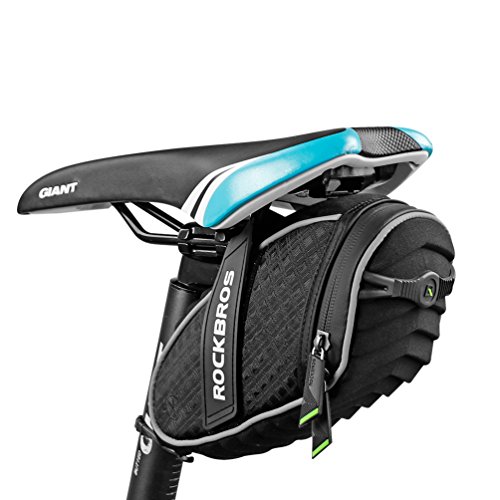
Not every bag needs a rack. A saddle pack, also called a seat bag or underseat bag, fits beneath the bicycle seat and attaches to the rails of the saddle itself. REI’s guide says these bags are best for carrying small items like a multi-tool, spare tube, tire levers, a patch kit or an energy bar. Larger models can hold a few extra items, but capacity remains limited compared to a rack-mounted bag. Because the bag mounts directly to the saddle, there is no rack hardware to install, which makes it a lightweight option for minimalist commutes or road rides.
How to Choose the Right Bag for Your Rack
Once you have a rack, the bag you attach to it determines how easy it is to access your gear and how well it stays put. REI’s overview of bike bags highlights several types that work with rear and front racks.
Panniers are roomy, weather-resistant bags that hang off the sides of a rack. They attach with spring-loaded hooks, clips or bungee cords and can be quickly disconnected so you can take your gear with you. REI warns that panniers mounted too far forward can interfere with your heel as you pedal, so check clearance before you ride. Trunk bags sit on top of a rear rack and are smaller than panniers but larger than a seat bag. Many have reinforced bases and divided storage, and some include integrated rain covers. Handlebar bags attach to the bars with clamps or straps and offer easy access to frequently used items like a camera, sunscreen or snacks. REI cautions that a handlebar bag must not block your brakes or shifters, and overloading it can affect balance because the weight sits high. Frame bags fit inside the main triangle of the bike and are ideal for stowing heavy items low, which helps keep the center of gravity down. Some frame bags take up nearly the entire triangle, while others partially fill it, and they may prevent you from mounting bottle cages inside that space.
| Rack or bag type | Mounting | Best for |
|---|---|---|
| Rear rack | Braze-on mounts or C-clips around frame tubes | Everyday commuting, touring, carrying panniers or trunk bags |
| Front standard rack | Braze-on mounts on fork | Touring with large volume, carrying gear above and beside the front wheel |
| Front low rider rack | Braze-on mounts on fork | Better balance with side-mounted bags, keeping weight low |
| Saddle pack (seat bag) | Attaches to saddle rails | Small essentials: multi-tool, spare tube, patch kit, energy bar |
Packing Tips for Better Handling
How you distribute weight on the bike affects comfort and control. REI’s bikepacking advice emphasizes that you should not carry a lot of weight on your back. Instead, place most of the weight as low as possible on the bike to improve handling. A typical beginner setup might include a dry bag secured to a rear rack for heavier items, a handlebar bag for light to moderate gear like a tent or clothing, and water bottle cages that keep water weight low and centered. Panniers can carry heavy items such as food and a stove, but bikepackers riding narrow singletrack often skip panniers because their width makes them easy to damage.
When you ride with loaded racks, REI suggests limiting your speed, especially on downhills, allowing longer stopping distances, and giving yourself more room for cornering. Adding a bit more air to your tires and, if your bike has suspension, adjusting the preload or air pressure helps support the extra weight.
Commuting with Racks and Bags
For bike commuters, a rear rack paired with panniers or a trunk bag keeps weight off your shoulders and back. REI’s commuter gear guide notes that panniers keep the load low on the bike’s center of gravity for more stability, and you can take them into the office. The trade-off is that the combination of a rear rack and panniers increases wind drag and adds stress to the rear wheel. A trunk bag offers a smaller, more aerodynamic option that still holds a change of clothes or lunch. An underseat bag is a convenient way to carry a spare tube and tools, but it cannot hold a change of clothes.
Bike laws for lights, helmets and e-bike classes vary by state and city, so check your local requirements before commuting. A rear bike light mounted on the rack or seatpost can improve visibility, and many commuters pair it with a front light for riding in low light.
Frequently asked questions
Can I install a rear rack on any bike?
REI’s guide explains that rear racks are designed to attach to braze-on mounts, but if your bike lacks those mounts, most racks include metal C-clips that wrap around the frame tubes and accept the lower mounting bolt. This allows you to mount a rack on many bikes that do not have dedicated eyelets.
Do I need a front rack for commuting?
REI calls a front rack a secondary option after a rear rack, because it adds weight to the front wheel and can affect steering and balance, and notes that front racks are popular mostly with touring cyclists who carry large volumes of gear.
What is the difference between a saddle pack and a trunk bag?
A saddle pack attaches directly to the saddle rails and is best for small repair items and a few essentials. A trunk bag sits on top of a rear rack and offers more capacity for extra clothing, tools and food, often with divided storage and a reinforced base.
For more on carrying gear on your bike, see our Bags & Storage category page.