Bike lights do more than help you see: the mount you choose shapes how visible you are, how easy the light is to use, and how secure it stays on the bike. This guide walks through handlebar, helmet, seatpost, rack, pack and spoke positions, explains the trade-offs, and covers the basics of beam aim, battery types, and theft prevention.
Light Types: To See or Be Seen
REI’s bike light guide divides lights into two broad groups: high-output systems rated at 250 lumens and up, and safety lights that fall below 250 lumens. High-output lights are rechargeable, bright enough to illuminate the road or trail ahead, and designed to help you see in nearly all conditions. Safety lights are built to make you visible to motorists in dim light, and the brightest models also improve daytime visibility, but REI notes they are not bright enough to help you see where you are going for most night riding.
Differences among safety light models include mounting options, the number of LEDs, and whether they use rechargeable or disposable batteries, according to REI. Understanding these categories helps you pick a mount that matches the light’s purpose.
Mounting Locations and Their Trade-Offs
Where you attach a light changes how well it works and how convenient it is. REI’s guide describes several common mounting spots for front and rear lights, and the commuter gear guide adds practical notes about handlebar clutter.
Handlebar Mounts
Most headlights mount on the handlebar. This keeps the light centered and easy to reach. However, REI’s commuter gear guide points out that a handlebar bag can obstruct a light, bike computer, or GPS unit. If you run a handlebar bag, check that the light still has a clear view ahead before you ride. For more on bag choices, see our handlebar bag guide.
Helmet Mounts
Many headlights can also mount on a helmet. REI explains that a helmet-mounted light’s beam follows where you turn your head, making it the most versatile option if you use only one light. For nighttime trail riding, REI suggests considering both a handlebar light and a helmet light. Our guide to helmet-mounted bike lights covers when they help most.
Seatpost and Rear Mounts
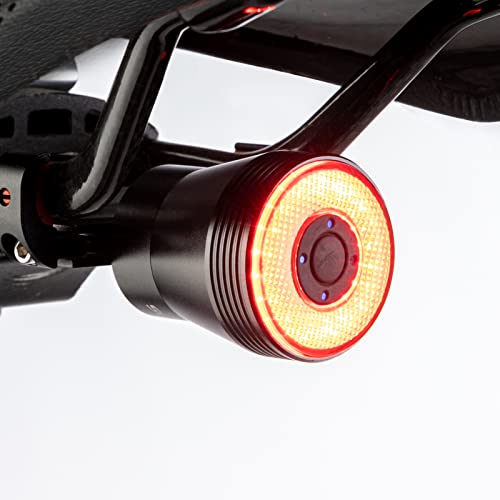
Rear safety lights can be mounted on a seatpost, pack, pocket, or the back of a rear bike rack, according to REI. A seatpost mount is straightforward, but a saddle bag or trunk bag can block the light. Clipping a light to a pack or rack can solve that. For a deeper look at rear light placement, see our rear bike light guide.
Side and Spoke Mounts
Side safety lights usually mount on spokes or the frame. REI notes that spoke-mounted lights are especially visible because they clearly show the wheels in motion. These are supplementary and do not replace front and rear lights.
Mount Location Pros and Cons at a Glance
| Mount Location | Pros | Cons |
|---|---|---|
| Handlebar | Where headlights normally mount (REI). | A handlebar bag can obstruct a light (REI commuter guide). |
| Helmet | Beam goes where you turn your head; most versatile if you use only one light (REI). | Usually paired with a handlebar light for night trail riding (REI). |
| Seatpost (rear) | A standard spot for rear safety lights (REI). | A saddle bag or trunk bag can block it; check after packing. |
| Rear rack | Some rear lights mount on the back of a rack (REI). | Needs a rack and a light that supports this mount. |
| Pack or pocket (rear) | Rear safety lights can mount here (REI). | Check that clothing or the bag does not cover the light. |
| Spoke or frame (side) | Spoke lights clearly show your wheels in motion (REI). | Side safety lights add to, not replace, front and rear lights. |
Beam Pattern and Aiming
REI’s bike light guide explains that a narrow-focus beam works well on streets with streetlights, while a wide-focus beam gives better peripheral vision on darker roads or trails. Because beam patterns can be hard to compare from specs alone, REI suggests checking online product descriptions or asking a sales specialist for help.
Once the light is mounted, look at where the beam actually lands on the road or trail and adjust it so it lights your path rather than other road users’ eyes. Recheck the mount before rides, since a light that has slipped no longer points where you set it.
Rechargeable vs. Disposable Batteries
High-output lights typically use rechargeable lithium ion batteries. According to REI, these can be charged hundreds of times, making them an inexpensive and environmentally sound alternative to disposable batteries. Unlike alkalines that dim slowly, most rechargeables deliver consistent light until the power is exhausted, so they include a fuel gauge or low-battery warning. Lithium ion batteries offer excellent power for their weight and long run times, and they suffer no memory effects from being fully discharged.
Safety lights may use disposable batteries. REI notes that the main differences among safety light models include whether they use rechargeable or disposable batteries. If you choose a rechargeable system, plug it in and charge it before every use, because inactive batteries lose charge over time. Most systems come with smart chargers that stop automatically when the batteries are full to prevent overcharging.
Keeping Lights Secure and Preventing Theft
Quick-release hardware lets you take a light with you when you leave your bike, especially when the battery and light are contained in a single unit, REI advises. Taking the light with you is the simplest way to keep it. For more on securing your bike, see our guide to locking a bike properly.
Legal Considerations
Bike light laws, including when lights are required and what kind, vary by state and city. Check your local rules before riding at night. Our commuting bike lights guide covers more on visibility and legal requirements.
Frequently asked questions
Can I mount a light on my helmet instead of the handlebar?
Yes, many headlights can mount on a helmet. REI says a helmet-mounted light is the most versatile if you use only one light, because the beam follows your head movement. For night trail riding, REI suggests considering a handlebar light as well.
How do I keep my rear light from being blocked by a saddle bag?
If a saddle bag blocks a seatpost-mounted light, REI suggests mounting the light on a pack, pocket, or the back of a rear rack. For more tips, see our rear bike light guide.
Should I remove my bike lights when I park?
Quick-release mounts make it easy to take lights with you, which REI recommends, especially for units where the battery and light are in one housing. This reduces the risk of theft.
For more help choosing the right lights and mounts, browse our bike lights category.