 By Logan Fleming
Updated November 2026
Finding the best bike computer for touring means balancing a few competing needs: reliable turn-by-turn navigation, enough battery to last a full day in the saddle, a screen you can read in bright sun, and a body that survives rain, dust and the occasional drop. Touring riders also tend to care about map storage, route planning and how well a unit works with heart rate straps, cadence sensors and power meters. The six models below were selected by reviewing manufacturer specifications, brand track record and the patterns owners commonly report about navigation accuracy, battery endurance and build quality. None of these were tested by our team; the comparisons rely on published specs and owner feedback.
Our top picks at a glance
- 1
 TOP CHOICEBest overallGarmin Edge 1050, Premium Cycling ComputerView on Amazon
- 2
 TOP CHOICEBest for long battery life on multi-day ridesGarmin Edge 540, Compact GPS Cycling ComputerView on Amazon
- 3
 TOP CHOICEBest for turn-by-turn navigation on a budgetCOOSPO CS600 Color Touchscreen GPS Bike ComputerView on Amazon
- 4
 Best for map-based touring with a large screeniGPSPORT BSC500 GPS Bike ComputerView on Amazon
- 5
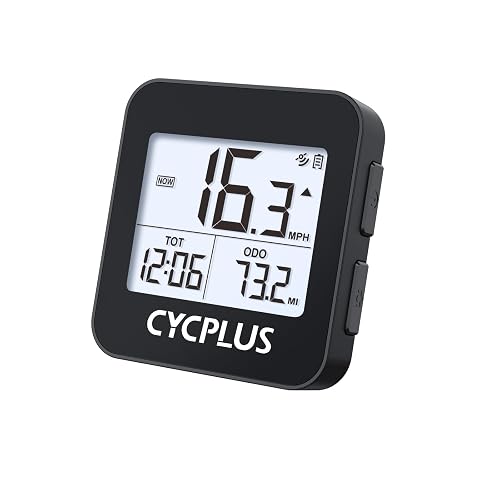 Best for compact, lightweight setupsCYCPLUS G1 Pocket-Size Bicycle ComputerView on Amazon
- 6
 Best for riders already in the Wahoo ecosystemWahoo ELEMNT BOLT V3 Aero GPS Bike Computer with NavigationView on Amazon
Our Top Picks
Quick Comparison
| Product | Best for | Key feature |
|---|---|---|
| Garmin Edge 1050 | Overall touring with full navigation | Large, bright touchscreen and advanced metrics |
| Garmin Edge 540 | Multi-day rides with long battery life | Up to 26 hours of battery and button controls |
| COOSPO CS600 | Budget-minded riders wanting navigation | Color touchscreen with route navigation |
| iGPSPORT BSC500 | Map-heavy touring with voice guidance | 3.3-inch touchscreen and voice navigation |
| CYCPLUS G1 | Minimalist, lightweight setups | Compact 70-gram body with long working time |
| Wahoo ELEMNT BOLT V3 | Riders using Wahoo sensors and apps | Turn-by-turn navigation with dual-band GPS |
Garmin Edge 1050, Premium Cycling Computer
Large & Vivid Touchscreen, Advanced Cycling Metrics, Built-In Speaker, Garmin Coach, Groupride, Road Hazard Alerts Garmin Edge® 1050, Premium Cycling Computer
Best for: Overall touring with full navigation and detailed metrics
This is the model for riders who want the largest, most capable screen in the lineup and do not mind paying a premium for it. It suits long-distance tourers who plan routes in advance and want a unit that handles mapping, climbing data and training features in one place.
Key specs:
- Large touchscreen with a vivid display, as stated in the listing
- Built-in speaker for audible alerts
- Advanced cycling metrics and Garmin Coach support
- Road hazard alerts and group ride features
Pros:
- Large screen that is easy to read in bright conditions
- Strong navigation and route-following tools
- Broad compatibility with sensors and training platforms
Cons:
- Larger and heavier than minimalist alternatives
- Full feature set can feel like overkill for casual tourers
Bottom line: Choose this if you want the most complete touring computer Garmin offers and value screen size above all else.
Garmin Edge 540, Compact GPS Cycling Computer
GarminButton Controls, Targeted Adaptive Coaching, Advanced Navigation, Up to 26 hours Edge 540, Compact GPS Cycling Computer
Best for: Multi-day rides with long battery life
The Edge 540 targets riders who need dependable endurance and a smaller footprint. It is a good match for tourers who ride all day and prefer physical buttons they can operate while wearing gloves.
Key specs:
- Button controls for glove-friendly operation
- Battery life rated up to 26 hours, per the listing
- Advanced navigation and adaptive coaching features
Pros:
- Strong battery endurance for long days
- Compact size that fits small handlebars well
- Buttons work reliably in rain and with gloves
Cons:
- Smaller screen than the 1050 makes map detail harder to read
- Fewer on-screen features than the premium model
Bottom line: A strong pick for riders who value battery life and simple controls over a large display.
COOSPO CS600 Color Touchscreen GPS Bike Computer
COOSPO Color Touchscreen GPS Bike Computer CS600, Wireless IPX7 Waterproof Cycling GPS Speedometer with Bluetooth/ANT+, Backlight Route Navigation, Support Bike Radar & 36H Battery Life
Best for: Budget-minded riders wanting navigation
This unit suits touring riders who want route navigation and a color screen without the cost of a major brand flagship. It is a practical option for those testing whether a dedicated computer fits their riding before committing to a premium model.
Key specs:
- Color touchscreen with backlight
- IPX7 waterproof rating, as stated in the listing
- Bluetooth and ANT+ connectivity
- Battery life rated up to 36 hours, per the listing
Pros:
- Route navigation on a color screen at a budget-friendly level
- Long rated battery life
- Waterproof body suits wet touring conditions
Cons:
- Brand ecosystem and third-party app support is smaller than Garmin’s
- Owners often mention a learning curve when setting up routes
Bottom line: Pick this if you want navigation features without the premium price tag and are comfortable with a less established ecosystem.
iGPSPORT BSC500 GPS Bike Computer
iGPSPORT BSC500 GPS Bike Computer, 3.3'' Touch Screen MAP Voice Navigation
Best for: Map-heavy touring with voice guidance
The BSC500 is aimed at riders who lean on maps and spoken directions. It fits touring cyclists who frequently ride unfamiliar roads and want a larger touchscreen for reviewing routes.
Key specs:
- 3.3-inch touchscreen, per the listing
- Map display and voice navigation
Pros:
- Large touchscreen makes map reading easier
- Voice navigation keeps eyes on the road
- Good fit for route-following on unfamiliar terrain
Cons:
- Touch interface can be less reliable with wet or gloved hands, according to some owner reports
- Battery use increases noticeably with navigation and voice active
Bottom line: A good choice for map-focused tourers who want voice prompts and a big display.
CYCPLUS G1 Pocket-Size Bicycle Computer
Pocket-Size, Bicycle Speedometer Odometer with Automatic Backlight, >55h Working Time, Provide Professional Data Analysis CYCPLUS Wireless GPS Bike Computer G1, 70g, 2.0" Screen, IPX6, 1200mAh
Best for: Compact, lightweight setups
The G1 is for riders who prioritize weight and simplicity. It works well for bikepacking-style tours where every gram matters and the rider mainly needs speed, distance and basic GPS track recording.
Key specs:
- Weight of 70 grams, per the listing
- 2.0-inch screen
- IPX6 water resistance, per the listing
- Working time of more than 55 hours, per the listing
Pros:
- Very light and small, easy to mount on any bar
- Long working time for multi-day use
- Simple interface that is quick to read at a glance
Cons:
- Small screen limits map and navigation usefulness
- Fewer advanced training metrics than larger units
Bottom line: Best for riders who want basic tracking and navigation data in the lightest possible package.
Wahoo ELEMNT BOLT V3 Aero GPS Bike Computer with Navigation
Cycling Computer • 2.3in Color Screen • Turn-by-Turn Navigation • DualBand GPS • 20hr Battery • ANT+, Bluetooth, Wi-Fi • IPX7 Wahoo ELEMNT BOLT V3 Aero GPS Bike Computer with Navigation
Best for: Riders already in the Wahoo ecosystem
The BOLT V3 suits touring riders who already use Wahoo sensors, trainers or the ELEMNT app. Its dual-band GPS and turn-by-turn navigation make it a solid all-round tool for road-based touring.
Key specs:
- 2.3-inch color screen, per the listing
- Turn-by-turn navigation and dual-band GPS
- ANT+, Bluetooth and Wi-Fi connectivity
- IPX7 rating and up to 20 hours of battery, per the listing
Pros:
- Dual-band GPS improves positioning in challenging areas
- Good connectivity for software updates and data sync
- Waterproof body suits wet touring weather
Cons:
- Battery life is shorter than the Edge 540 and CS600 ratings
- Screen is smaller than the 1050 for detailed map viewing
Bottom line: Choose this if you are invested in Wahoo sensors and want reliable navigation in a mid-size unit.
Buying Guide
Navigation and Route Support
Touring relies on following a route you have loaded in advance. Look for turn-by-turn prompts, the ability to import GPX or FIT files, and how the unit recalculates when you leave the course. Map display size matters more than many riders expect, because you will be checking directions at intersections repeatedly.
Good picks for this: Garmin Edge 1050, iGPSPORT BSC500
Battery Life and Charging
Manufacturers usually state battery life under mixed conditions, and navigation with the screen on drains power faster. Plan for a full day of use with navigation active, and consider whether you can recharge from a power bank during a stop. Check whether the unit charges by USB and whether that cable is included.
Good picks for this: Garmin Edge 540, COOSPO CS600
Screen Size and Readability
A bright, legible screen is essential for riding in direct sun. Larger screens make maps easier to read but add weight and bulk. Touchscreens are convenient, but some owners report reduced responsiveness with wet or gloved hands, so physical buttons can be an advantage on long tours.
Good picks for this: Garmin Edge 1050, Garmin Edge 540
Weight and Size
Every extra gram adds up on a multi-day ride. Compact units are easier to mount on a stem or small bar and leave room for other accessories. If you carry a lot of gear on the handlebars, a smaller computer may be easier to fit alongside lights and bags.
Good picks for this: CYCPLUS G1, Wahoo ELEMNT BOLT V3
Weather Resistance and Durability
Touring exposes electronics to rain, road spray and dust. Check the stated ingress protection rating; IPX6 and IPX7 ratings describe resistance to high-pressure water and temporary immersion, respectively. Look also for mounts with secure locking so the unit does not vibrate loose on rough surfaces.
Good picks for this: Wahoo ELEMNT BOLT V3, COOSPO CS600
Sensor Compatibility
If you use a heart rate strap, cadence sensor, power meter or radar tail light, confirm the unit supports ANT+ and Bluetooth for those devices. Compatibility with your existing sensors can save significant trouble on the road.
Good picks for this: Garmin Edge 1050, Wahoo ELEMNT BOLT V3
Mounting and Accessories
Think about how the computer will attach to your bike, whether to a stem, a bar or a dedicated out-front mount. Some touring setups need a secure mount that stays put over washboard gravel. Plan on carrying a spare charging cable and, if possible, a protective case.
Good picks for this: CYCPLUS G1, Garmin Edge 540
FAQ
Do I need a bike computer for touring, or is my phone enough?
A phone can handle navigation, but it drains quickly, is harder to read in sunlight and is exposed to rain. A dedicated bike computer is designed for weather, mounts securely and conserves battery better during long days.
How long should a touring bike computer battery last?
For multi-day touring, look for a unit whose stated battery life comfortably exceeds your daily riding time, especially with navigation active. Plan to recharge daily regardless, since real-world use often falls below rated figures.
What does IPX7 mean on a bike computer?
IPX7 indicates the device can withstand temporary immersion in water under specified conditions. It offers good protection against rain and splashes, though it does not make the unit suitable for prolonged submersion.
Can I load my own routes onto these units?
Most touring-oriented computers support importing routes in standard file formats such as GPX. Check the manufacturer’s documentation for the exact file types and the method for transferring them to the unit.
Is a larger screen always better for touring?
Not always. Larger screens make maps easier to read but add weight and can be harder to mount on small handlebars. Choose based on how much you rely on maps versus simple data fields.
Do bike computers work with heart rate monitors and power meters?
Most mid-range and premium units support ANT+ and Bluetooth sensors. Confirm compatibility with your specific heart rate strap, cadence sensor or power meter before buying.
Should I consult a professional before buying?
For most cyclists, the choice is a matter of preference and budget. If you have a medical condition that requires heart rate or other health monitoring, consult your physician or a qualified professional before relying on device readings for training decisions.
Conclusion
For most touring riders, the Garmin Edge 1050 offers the most complete navigation and screen experience, while the Garmin Edge 540 is a better fit for those prioritizing battery life and glove-friendly buttons. Budget-focused riders may find the COOSPO CS600 covers essential navigation needs, and map-heavy tourers may prefer the iGPSPORT BSC500 for its larger display and voice prompts. Minimalists who want the lightest setup should consider the CYCPLUS G1, and riders already invested in Wahoo sensors will find the ELEMNT BOLT V3 a natural fit. Match the unit to your route style, battery needs and existing sensors, and confirm specifications directly with the manufacturer before purchasing.
Sources
- Guidance on physical activity and safe exercise levels that can help you plan rides and monitor effort (cdc.gov)
- Information on trail conditions, navigation safety and planning long routes in public lands (nps.gov)
- Consumer safety information on battery-powered devices and charging practices (cpsc.gov)
Related reading
- Wahoo GPS Bike Computer Picks: 8 Best Options Compared (2026)
- Stationary Bike Computer Stand: 5 Best Picks for Indoor Riders (2026)
- Polar Bike Computer Mount: 6 Best Options Compared (2026)
- Mountain Bike Cycling Computer: 9 Best Picks for Trail Riders (2026)
- Garmin Mountain Bike Computer: 7 Best Picks for Trail Riders (2026)
- Garmin Computer for Bike: 7 Best Picks Compared for Every Rider (2026)

About Logan Fleming
Logan puts together our cycling apparel & tech guides, digging through specifications, manufacturer details and owner reviews so you don't have to.


Write Your Review
No reviews yet. Be the first to share your experience!