 By Logan Fleming
Updated November 2026
Choosing the best road bike computer comes down to a handful of practical questions: how you navigate, whether you train with power or heart rate, how long your rides run, and how much screen you want in front of you at 30 miles per hour. This guide compares six models from the CYCPLUS, iGPSPORT and Garmin Edge lines. Each was selected by checking manufacturer specifications, brand reputation and the patterns owners tend to report about GPS accuracy, battery life, mounting and software. None of these units were tested by us; the comparison is built from published specs and owner feedback.
Our top picks at a glance
- 1
 TOP CHOICEBest overallGarmin Edge 1050View on Amazon
- 2
 TOP CHOICEBest for structured trainingGarmin Edge 840View on Amazon
- 3
 TOP CHOICEBest for turn-by-turn navigationiGPSPORT BSC500 GPS Bike ComputerView on Amazon
- 4
 Best budget pickCYCPLUS GPS Wireless Bike Computer M1View on Amazon
- 5
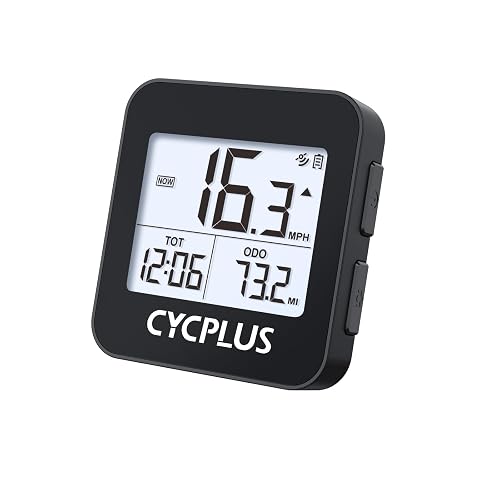 Best for minimalist road bikesCYCPLUS G1 Wireless GPS Bike ComputerView on Amazon
- 6
 Best for long-battery ridesBicycle Speedometer Odometer Wireless GPS Bike Computer (50g)View on Amazon
Our Top Picks
Quick Comparison
| Product | Best for | Key feature |
|---|---|---|
| Garmin Edge 1050 | Best overall | Large touchscreen with Garmin Coach and road hazard alerts |
| Garmin Edge 840 | Structured training | Compact body with advanced cycling metrics |
| iGPSPORT BSC500 | Turn-by-turn navigation | 3.3-inch touch screen with map voice navigation |
| CYCPLUS GPS Wireless Bike Computer M1 | Budget pick | Multi-satellite positioning and Strava sync |
| CYCPLUS G1 | Minimalist road bikes | 70g body with IPX6 water resistance |
| Bicycle Speedometer Odometer Wireless GPS Bike Computer (50g) | Long battery life | 28-hour runtime and IPX7 rating |
Garmin Edge 1050
Large & Vivid Touchscreen, Advanced Cycling Metrics, Built-In Speaker, Garmin Coach, Groupride, Road Hazard Alerts Garmin Edge® 1050, Premium Cycling Computer
Best for: Overall performance and structured training
This is the model for riders who want a large, vivid screen, built-in speaker and the full set of coaching and group ride features. It suits experienced road cyclists who ride long distances and want detailed metrics without leaving the handlebar view.
Key specs
- Large touchscreen display
- Built-in speaker for alerts and navigation prompts
- Garmin Coach workouts and Groupride features
- Road hazard alerts
Pros
- Bright, readable touchscreen in direct sun
- Deep training analytics and workout structure
- Strong ecosystem with Garmin sensors and apps
Cons
- Larger footprint than compact alternatives
- Full feature set can take time to configure
Bottom line: The strongest all-round choice for serious road riders who want coaching, navigation and alerts in one unit.
Garmin Edge 840
Garmin Edge 840, Compact GPS Cycling Computer
Best for: Structured training in a compact body
The Edge 840 targets riders who want Garmin’s training metrics without the bulk of a large-screen unit. It fits road bikes with tight cockpits and suits cyclists focused on power and workout data.
Key specs
- Compact GPS cycling computer design
- Advanced cycling metrics and training load tracking
- Compatible with ANT+ and Bluetooth sensors
Pros
- Small, lightweight profile for crowded handlebars
- Solid training analytics for the price tier
- Easy pairing with power meters and heart rate straps
Cons
- Smaller screen makes map reading harder than on larger units
- Fewer on-screen fields than the top-tier model
Bottom line: A good pick for road riders who train with power and want a compact unit that doesn’t crowd the bar.
iGPSPORT BSC500 GPS Bike Computer
iGPSPORT BSC500 GPS Bike Computer, 3.3'' Touch Screen MAP Voice Navigation
Best for: Turn-by-turn navigation
This model is aimed at riders who explore unfamiliar roads and want on-screen maps with spoken directions. Its 3.3-inch touchscreen is the main draw for route-focused cyclists.
Key specs
- 3.3-inch touch screen
- MAP voice navigation
- GPS route guidance
Pros
- Large map view makes route-following simple
- Voice prompts reduce the need to glance down
- Good fit for touring and gravel-adjacent road riding
Cons
- Map-heavy use can shorten battery life noticeably
- Route file setup takes some learning
Bottom line: Best for riders who prioritize navigation over training metrics and want a big map on the bar.
CYCPLUS GPS Wireless Bike Computer M1
4 Satellite Positioning, Bluetooth/ANT+, Auto Backlight Speedometer, >60 hours Working Time, Sync to CYCPLUS FIT and Strava CYCPLUS GPS Wireless Bike Computer M1, 2.9" LCD Screen, IPX6, 1200mAh
Best for: Budget-conscious riders who want GPS and Strava sync
The M1 is designed for riders who want core GPS tracking, Bluetooth and ANT+ connectivity and Strava or FIT file sync without paying for a premium unit. It works well as a first dedicated computer.
Key specs
- 4-satellite positioning
- Bluetooth and ANT+ connectivity
- 2.9-inch LCD screen
- IPX6 water resistance
- 1200mAh battery, listed at over 60 hours
Pros
- Strong battery figure for the category
- Syncs to Strava and FIT-compatible platforms
- Auto backlight and automatic start/stop
Cons
- LCD screen is smaller and less vivid than premium touchscreens
- No built-in maps for turn-by-turn navigation
Bottom line: A sensible budget pick for riders who need reliable tracking and sync more than maps or coaching.
CYCPLUS G1 Wireless GPS Bike Computer
Pocket-Size, Bicycle Speedometer Odometer with Automatic Backlight, >55h Working Time, Provide Professional Data Analysis CYCPLUS Wireless GPS Bike Computer G1, 70g, 2.0" Screen, IPX6, 1200mAh
Best for: Minimalist road bikes with tight cockpits
At 70 grams, the G1 is one of the lighter options here. It suits riders who want a small unit that barely registers on the bar and still delivers GPS speed, distance and data analysis.
Key specs
- 70g body weight
- 2.0-inch screen
- IPX6 water resistance
- 1200mAh battery
- Automatic backlight
Pros
- Very light and unobtrusive on drop bars
- Automatic backlight suits early or late rides
- Covers the basics of speed, distance and odometer
Cons
- Small screen limits how many data fields you can read at once
- Fewer advanced training features than Garmin models
Bottom line: Good for minimalists who want clean cockpits and basic ride data without a large display.
Bicycle Speedometer Odometer Wireless GPS Bike Computer (50g)
Bicycle Speedometer Odometer, Green Auto Backlight, Auto Start Stop, MPH/KMH, Altitude and Gradient Data Wireless GPS Bike Computer, 50g, 2.4" Screen, IPX7, 28H Runtime
Best for: Long rides where battery life matters most
This lightweight unit is aimed at riders who do long days in the saddle and want fewer charging stops. Its IPX7 rating also suits riders who ride in heavy rain.
Key specs
- 50g body weight
- 2.4-inch screen
- IPX7 water resistance
- 28-hour runtime
- Altitude and gradient data, MPH/KMH switching
Pros
- Among the lightest units in this list
- IPX7 rating is a step above IPX6 for wet weather
- Auto start/stop and gradient readouts are useful on climbs
Cons
- 28-hour runtime is shorter than the M1’s listed figure
- Brand support and software updates are less established than Garmin’s
Bottom line: A practical choice for endurance riders and wet-weather commuters who value weight and water resistance.
Buying Guide
GPS and Navigation Features
If you ride unfamiliar roads, look for a unit with a map display and turn-by-turn prompts. Route-following on a small monochrome screen is workable but tiring. Check whether the unit imports GPX or FIT route files from your planning app, and whether it recalculates when you miss a turn.
Good picks for this: iGPSPORT BSC500, Garmin Edge 1050
Screen Size and Readability
Screen size is the trade-off most riders feel first. A 2-inch display can show speed, cadence and distance clearly but struggles with maps. Larger touchscreens are easier to read in glare, but they add weight and bulk. Consider how many data fields you want on one page before deciding.
Good picks for this: Garmin Edge 840, CYCPLUS G1
Sensor Compatibility
Confirm that the computer supports ANT+ and Bluetooth, since most heart rate straps, cadence sensors and power meters use one or both. Many budget units handle speed and cadence well but can be limited with power meters, so check the manufacturer’s compatibility list before buying.
Good picks for this: Garmin Edge 840, CYCPLUS GPS Wireless Bike Computer M1
Battery Life and Charging
Manufacturers list battery life under specific conditions, usually with GPS recording and no backlight. Real-world figures drop when you use maps or the backlight. For rides longer than six or seven hours, plan a charge during the day or carry a USB power bank.
Good picks for this: Bicycle Speedometer Odometer Wireless GPS Bike Computer (50g), CYCPLUS GPS Wireless Bike Computer M1
Weight and Mounting Fit
Weight matters less than mounting fit, but both affect how the unit sits on your bar. Check whether the mount fits your handlebar diameter and whether it works with your stem and any aero bar setup. Light units are easier on minimal mounts, while heavier units need a stronger bracket.
Good picks for this: CYCPLUS G1, Bicycle Speedometer Odometer Wireless GPS Bike Computer (50g)
Water Resistance
IPX ratings describe resistance to water ingress. IPX6 covers strong jets of water, while IPX7 covers temporary immersion. Both suit typical road riding in rain, but IPX7 gives more margin for wet commutes and puddle-filled roads. Neither rating means the unit is safe to submerge for long periods.
Good picks for this: Bicycle Speedometer Odometer Wireless GPS Bike Computer (50g), Garmin Edge 1050
Training Analytics and Coaching
If you train with a structured plan, look for workout import, training load and recovery metrics. Simpler units show speed, distance and time, which is enough for casual riding but limited for periodized training.
Good picks for this: Garmin Edge 1050, Garmin Edge 840
FAQ
Do I need a GPS bike computer for road riding?
Not always. GPS is essential if you want route guidance, accurate distance on unfamiliar roads or ride tracking in Strava. If you only need speed, cadence and distance on familiar routes, a wired or basic wireless computer may be enough.
What is the difference between ANT+ and Bluetooth?
Both are wireless protocols for connecting sensors. ANT+ was developed for fitness devices and is widely supported by cycling hardware. Bluetooth is common on phones and some sensors. Many modern computers support both, which gives you more compatibility options.
How accurate is GPS on a bike computer?
Accuracy depends on satellite visibility, tree cover, tall buildings and the quality of the receiver. Most current units perform well in open conditions. In dense urban areas or under heavy canopy, expect some drift, and consider pairing with a speed sensor for better consistency.
Can I use my phone instead of a bike computer?
Yes, many riders do. A phone with a cycling app provides GPS, maps and tracking. Dedicated computers add advantages in battery life, weather resistance, sensor support and readability in sunlight, so the choice depends on how much you value those factors.
Do I need a bike computer mount?
Yes. Most units ship with a basic mount, but aftermarket options may offer better stability on rough roads or fit specific handlebar shapes. Check the mount’s compatibility with your bar diameter and whether it allows quick removal for security.
How long does a typical bike computer battery last?
Listed figures range from roughly 20 to over 60 hours depending on model and settings. Actual battery life drops when you use maps, backlight or constant Bluetooth connection. If you ride long distances, check real-world reports and carry a power bank.
Conclusion
For most road riders, the Garmin Edge 1050 is the strongest all-round choice, especially if you want coaching and alerts. The Garmin Edge 840 suits riders who want training metrics in a compact body. The iGPSPORT BSC500 fits navigation-focused riders, while the CYCPLUS M1 is a sensible budget pick for tracking and Strava sync. The CYCPLUS G1 works for minimalist setups, and the 50g wireless unit suits endurance riders who need long battery life and strong water resistance. Match the choice to how you ride, and check sensor compatibility before buying.
Sources
- Background on battery safety and charging practices for portable electronics (energy.gov)
- Consumer safety guidance on lithium-ion batteries and recalls (cpsc.gov)
Related reading
- 8 Best Cateye Strada Wireless Bike Computer Alternatives for Road Riders (2026)
- Wahoo GPS Bike Computer Picks: 8 Best Options Compared (2026)
- Stationary Bike Computer Stand: 5 Best Picks for Indoor Riders (2026)
- Polar Bike Computer Mount: 6 Best Options Compared (2026)
- Mountain Bike Cycling Computer: 9 Best Picks for Trail Riders (2026)

About Logan Fleming
Logan puts together our cycling apparel & tech guides, digging through specifications, manufacturer details and owner reviews so you don't have to.


Write Your Review
No reviews yet. Be the first to share your experience!