 By Logan Fleming
Updated November 2026
Choosing a mountain bike cycling computer comes down to a few practical questions: Can you read the screen while bouncing over roots? Will the unit survive mud, rain and crashes? Does it give you the trail navigation and ride metrics you actually use? This list compares six units against those criteria. We weighed manufacturer specifications, brand track record, and the patterns owners tend to mention in their feedback, with a focus on screen readability, weather sealing, battery endurance, navigation features and how easily each unit mounts on a handlebar.
Our top picks at a glance
- 1
 TOP CHOICEBest overallGarmin Edge MTBView on Amazon
- 2
 TOP CHOICEBest for touchscreen navigationiGPSPORT BSC500View on Amazon
- 3
 TOP CHOICEBest for connected sensorsCOOSPO CS600View on Amazon
- 4
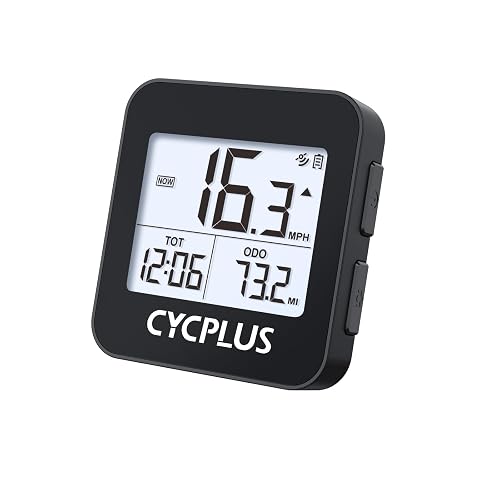 Best for long battery lifeCYCPLUS G1View on Amazon
- 5
 Best budget pickCATEYE Wired Bike ComputerView on Amazon
- 6
 Best for basic speed and distanceWireless GPS Speedometer with Green BacklightView on Amazon
Our Top Picks
Quick Comparison
| Product | Best for | Key feature |
|---|---|---|
| Garmin Edge MTB | Enduro and downhill riders who want trail maps | Preloaded full-color trail maps and ride profiles |
| iGPSPORT BSC500 | Riders who want turn-by-turn guidance on a large screen | 3.3-inch touchscreen with map and voice navigation |
| COOSPO CS600 | Riders who pair sensors and use a rear radar | Color touchscreen with Bluetooth and ANT+ and roughly 36-hour battery life |
| CYCPLUS G1 | Riders on multi-day rides who want minimal charging | Long working time and a compact, lightweight body |
| CATEYE Wired Bike Computer | Beginners and budget-minded riders | Simple wired setup with auto start and stop |
| Wireless GPS Speedometer (green backlight) | Riders who want speed, distance and altitude without extras | Auto backlight with altitude and gradient data |
Garmin Edge MTB
Enduro & Downhill Ride Profiles, Automatically Track Split Times While Riding, Full-Color Preloaded Trail Maps Garmin Edge® MTB, Rugged GPS Bike Computer, Mountain Biking Metrics
Best for: Enduro and downhill riders who want navigation and split tracking on technical terrain.
This is aimed at riders who spend most of their time on singletrack and want the computer to help with route choices and pacing. Owners often describe the trail map as the main reason they choose it over a basic unit.
Key specs
- Enduro and downhill ride profiles
- Automatic split time tracking while riding
- Full-color preloaded trail maps
- Rugged GPS build with mountain biking metrics
Pros
- Trail maps help with route planning without a phone
- Ride profiles tailored to enduro and downhill riding
- Split tracking makes it easy to compare runs
Cons
- Map features add complexity that casual riders may not need
- Setup and menu navigation take some time to learn
Bottom line: The best choice for riders who want a dedicated trail computer and value preloaded maps above all else.
iGPSPORT BSC500
iGPSPORT BSC500 GPS Bike Computer, 3.3'' Touch Screen MAP Voice Navigation
Best for: Riders who want touchscreen map navigation and voice prompts.
This suits riders who follow routes often, especially on unfamiliar trails, and who prefer touch controls over button menus.
Key specs
- 3.3-inch touchscreen
- Map display with voice navigation
Pros
- Large touchscreen is easy to read at a glance
- Voice navigation reduces the need to look down
- Map display suits route following
Cons
- Touchscreen can be harder to use with wet or gloved hands
- Larger body takes up more handlebar space
Bottom line: A strong pick for route followers who want a big screen and spoken directions.
COOSPO CS600
COOSPO Color Touchscreen GPS Bike Computer CS600, Wireless IPX7 Waterproof Cycling GPS Speedometer with Bluetooth/ANT+, Backlight Route Navigation, Support Bike Radar & 36H Battery Life
Best for: Riders who pair heart rate, cadence and power sensors and want rear radar support.
This fits riders who run a sensor setup and want a color touchscreen that connects over both Bluetooth and ANT+.
Key specs
- Color touchscreen
- Bluetooth and ANT+ connectivity
- Bike radar support
- IPX7 waterproof rating
- Manufacturer-listed battery life of about 36 hours
Pros
- Dual connectivity works with most common sensors
- Radar support adds rear-traffic awareness
- Long listed battery life for full-day rides
Cons
- Sensor pairing can take patience during first setup
- Feature set is easier to appreciate for riders who already use sensors
Bottom line: A good fit for data-focused riders who want sensor compatibility and radar on one unit.
CYCPLUS G1
Pocket-Size, Bicycle Speedometer Odometer with Automatic Backlight, >55h Working Time, Provide Professional Data Analysis CYCPLUS Wireless GPS Bike Computer G1, 70g, 2.0" Screen, IPX6, 1200mAh
Best for: Riders on long or multi-day outings who want a compact unit with minimal charging.
The compact body and long listed working time make this a practical choice for riders who do not want to think about charging between rides.
Key specs
- Listed working time of more than 55 hours
- 2.0-inch screen
- IPX6 water resistance
- 1200mAh battery
- Roughly 70 g body weight
Pros
- Very long working time for extended rides
- Light and compact on the bar
- Automatic backlight helps in changing light
Cons
- Smaller screen can be harder to read at speed
- Fewer advanced trail features than premium units
Bottom line: A sensible choice for riders who prioritize battery life and a lightweight setup.
CATEYE Wired Bike Computer
Entry-Level Speedometer and Odometer, Perfect for Beginner Cyclists, Auto Start/Stop, Easy Setup for Road, MTB, Gravel Bikes CATEYE Wired Bike Computer
Best for: Beginners and riders who want a simple speed and distance display.
This is an entry-level wired unit with auto start and stop and a setup process that most riders can finish quickly. It works across road, mountain and gravel bikes.
Key specs
- Wired connection to a wheel sensor
- Auto start and stop
- Speedometer and odometer display
Pros
- Simple, quick setup
- Low complexity suits new riders
- Works on several bike types
Cons
- Wired installation means cable routing on the frame
- No GPS, mapping or sensor connectivity
Bottom line: A practical starter unit for riders who need only the basics.
Wireless GPS Speedometer with Green Backlight
Bicycle Speedometer Odometer, Green Auto Backlight, Auto Start Stop, MPH/KMH, Altitude and Gradient Data Wireless GPS Bike Computer, 50g, 2.4" Screen, IPX7, 28H Runtime
Best for: Riders who want speed, distance, altitude and gradient in a small wireless unit.
This is a basic GPS unit that focuses on core ride numbers, with an auto backlight for low-light starts and finishes.
Key specs
- 2.4-inch screen
- Altitude and gradient data
- MPH and KMH display
- Auto start and stop
- IPX7 rating and listed 28-hour runtime
Pros
- Altitude and gradient data for climbs
- Listed 28-hour runtime
- Auto backlight aids visibility
Cons
- No trail maps or navigation
- Limited sensor support compared with multi-sensor units
Bottom line: A straightforward option for riders who want reliable core metrics without extra features.
Buying Guide
Screen size and readability
Mountain riders look at the screen in short glances, often while braking or steering around obstacles. Larger screens and high-contrast displays are easier to read at speed. Check the listed screen size and whether the unit offers an auto backlight for dim trails.
Good picks for this: iGPSPORT BSC500, Garmin Edge MTB
Waterproofing and durability
Mud, rain and drops are part of mountain riding. Look for an IP rating in the specifications. IPX7 units are typically rated for temporary immersion, while IPX6 units are rated for strong water jets. Neither rating means the unit is designed for submersion during rides, so rinse off grit after muddy outings.
Good picks for this: COOSPO CS600, CYCPLUS G1
Battery life
Check the manufacturer-listed battery life and think about your longest typical ride. Multi-day or all-day rides favor units with long listed runtimes. Frequent GPS use and backlight use both shorten battery life in practice.
Good picks for this: CYCPLUS G1, Wireless GPS Speedometer with Green Backlight
Navigation and maps
If you ride unfamiliar trails, look for preloaded maps or route guidance. Maps are useful, but they add setup steps and sometimes a learning curve. Basic riders who know their trails may not need them.
Good picks for this: Garmin Edge MTB, iGPSPORT BSC500
Sensor compatibility
If you use a heart rate monitor, cadence sensor or power meter, confirm that the unit supports Bluetooth, ANT+ or both. Compatibility with a rear radar is a separate feature worth checking if traffic awareness matters to you.
Good picks for this: COOSPO CS600, Garmin Edge MTB
Mounting and handlebar fit
Measure your handlebar diameter and check whether the mount fits it along with any light or dropper remote already installed. Compact units are easier to fit alongside other accessories. Wired units also need a clean cable route to the wheel sensor.
Good picks for this: CYCPLUS G1, CATEYE Wired Bike Computer
Ease of use and budget
Simple units with few buttons are quicker to learn, while touchscreen and map units take more time. Budget options can cover the essentials well, so decide which features you will actually use before paying for more.
Good picks for this: CATEYE Wired Bike Computer, Wireless GPS Speedometer with Green Backlight
FAQ
Do I need GPS on a mountain bike computer?
GPS provides speed, distance and route tracking that does not depend on a wheel sensor. Wired units without GPS can still give accurate speed and distance once calibrated to your wheel size.
What is the difference between wired and wireless bike computers?
Wired units connect to a wheel-mounted sensor by cable, which can be less convenient on a suspension bike. Wireless units use GPS or a wireless sensor and usually simplify installation.
Are mountain bike computers waterproof?
Most are rated with an IP code. Check the listed rating and assume it covers splashes and rain, not submersion.
How long do bike computer batteries last?
Manufacturers list typical runtimes, but real-world life depends on GPS use, backlight and screen brightness. Check the listed figure and plan to charge before long rides.
Can a bike computer connect to heart rate monitors?
Many models support ANT+ or Bluetooth heart rate straps. Confirm the protocols listed in the specifications before buying.
Is a more expensive unit always better for trail riding?
Not necessarily. Premium units offer maps and advanced metrics, but a simpler unit may suit riders who only want speed, distance and altitude.
Conclusion
For trail-focused navigation, the Garmin Edge MTB is the strongest match on this list. Riders who prefer a large touchscreen with spoken directions will likely favor the iGPSPORT BSC500. The COOSPO CS600 suits sensor-heavy setups, the CYCPLUS G1 works well for long battery life, and the CATEYE Wired Bike Computer and the wireless GPS speedometer cover basic needs. Match the choice to the features you will actually use on your trails.
Sources
- Product safety guidance that applies to cycling accessories and mounting hardware (cpsc.gov)
- Background on lithium battery handling and care for rechargeable devices (energy.gov)
Related reading
- Garmin Mountain Bike Computer: 7 Best Picks for Trail Riders (2026)
- Bike Computer for Mountain Biking: 6 Best Picks for Trail Riders (2026)
- Best Bike Computer Mountain Biking: 7 Factors That Matter for Trail Riders
- 9 Best Computers for Mountain Bike Picks for Trail Riders (2026)
- 8 Best Mountain Bike Computer Mounts for Trail Riders (2026)
- 7 Best Cycle Computers for Mountain Bike Picks for Trail Riders (2026)

About Logan Fleming
Logan puts together our cycling apparel & tech guides, digging through specifications, manufacturer details and owner reviews so you don't have to.


Write Your Review
No reviews yet. Be the first to share your experience!