 By Logan Fleming
Cycling in the rain with glasses is manageable once you understand the three problems that cause trouble: water on the lenses, fog building up inside them, and spray or grit getting past the frame. This guide walks through how to pick the right lens color and coating, set up your frame so water runs off instead of across your vision, and manage fog on the climb and the descent. By the end you will have a simple checklist you can use before every wet ride.
Why Rain Makes Glasses Harder to Ride With
Rain affects vision in three distinct ways, and each one needs a different fix. Droplets sitting on the front of the lens scatter light and create small blurry patches. Moisture trapped between your face and the lens can condense into fog, especially when you are breathing hard. And spray from your front wheel, along with road grit, can strike the lens at speed and smear across it. Most riders deal with one of these problems in dry conditions. Rain brings all three together, often in the same ride.
Shopping for one? See our guide: 7 Best Cycling Glasses with Prescription for Road Riders (2026).
Low light makes it worse. Overcast skies, dusk rides and wet tree-lined roads all reduce contrast, so the details you need to see, such as potholes, painted lines and other riders, become harder to spot. That is why lens tint matters as much as lens cleanliness.
Step 1: Choose the Right Lens Tint for Wet, Low-Light Riding
Dark smoke or mirrored lenses are designed for bright sun and cut glare effectively, but they make a gray, wet day look even darker. For rain, most riders are better served by lighter tints. Yellow, amber and rose lenses boost contrast on overcast roads and help you read the surface more clearly. Clear lenses are the simplest option when light is low, though they offer no glare reduction, so they work best when you are not riding into bright headlights or low sun.
If your conditions change during a single ride, a photochromic lens may suit you. These lenses adjust their tint as light levels shift, which can be useful on rides that begin in drizzle and end in brighter patches. Our guide to 9 Best Cycling Glasses Yellow Lenses for Low-Light Riding and the 9 Best Photochromic Cycling Glasses for Changing Light (2026) compares the main options.
Step 2: Confirm the Lens Has an Anti-Fog Coating
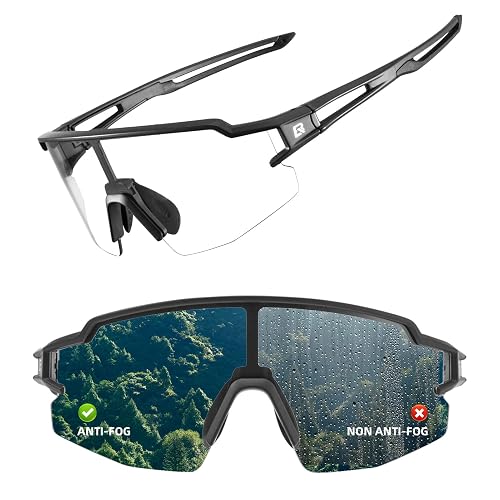
Fog is the most common complaint from riders who wear glasses in wet weather, and the cause is usually airflow rather than lens quality. Anti-fog coatings reduce the surface tension of water, so condensation spreads into a thin, clear film instead of forming beads. Look for lenses explicitly described as anti-fog, and check whether the coating is applied to the inside surface, since that is where your breath lands.
Coatings wear over time. Owners often report that anti-fog performance drops after repeated cleaning with harsh chemicals or paper towels. Use a microfiber cloth and clean water or a lens-safe spray. For a deeper look at options, see 7 Best Cycling Glasses Anti Fogs for Road and Trail Riders (2026).
Step 3: Set Up the Fit So Water Runs Away From Your Eyes
Frame fit has a large effect on how much water and spray reach your eyes. A frame that sits too high on the nose leaves a gap at the bottom where wind pushes air and spray upward. A frame that sits too low lets water run down the lens into your line of sight.
Sub-steps for a Better Seal
- Position the nose bridge so the lens sits about a finger’s width below your eyebrows.
- Check that the temples curve close to your head without pinching above the ears.
- Adjust the nose pads so the frame does not slide when you look down at the handlebars.
- Ride a short loop at a steady pace and look for gaps at the sides and bottom.
If you wear prescription lenses, fit matters even more because the optical center must line up with your eyes. Read Prescription Insert Cycling Glasses: How to Get Them Right before you order inserts.
Step 4: Use Wraparound Coverage and Ventilation Carefully
Wraparound frames block more spray from the side and reduce wind getting under the lens, which helps with both fog and grit. However, a fully sealed frame traps moisture. Look for vented designs that let air circulate without letting water through directly. Many riders find a small amount of airflow at the top of the frame reduces fog considerably.
For riders who prefer glasses that sit over a helmet or with extra protection, Cycling Over Glasses Goggles: How to Choose and Wear Them Right covers the trade-offs between coverage and comfort.
Step 5: Prepare Your Lenses Before the Ride
A few minutes of preparation prevents most problems on the road. Clean the lenses with water and a microfiber cloth to remove oils and dust, because contamination makes water spread unevenly. Some riders apply a dedicated water-repellent treatment, which encourages droplets to bead and roll off. Test any treatment on a single lens first, since some products can affect coatings.
Carry a second cloth in a jersey pocket or a small bag. Wet lenses are easier to clean with a dry cloth than with a dirty, damp one.
Step 6: Manage Fog and Spray During the Ride
Fog usually appears during climbs or stops, when breathing rate and humidity rise and airflow drops. Ease your effort slightly on climbs and avoid stopping with your face close to the lenses if you can. When you do stop, lift the glasses briefly to let the lenses clear. Spray is best managed by positioning yourself, not by the glasses alone. Riding a few bike lengths behind a rider, rather than directly in their wheel, keeps your head out of the worst of the spray.
On descents, wind and speed push water sideways. Keep your head level and your eyes forward, and avoid looking through the bottom edge of the lens toward the road.
Step 7: Plan for Visibility Beyond the Glasses
Glasses are only one part of staying seen and safe in the rain. Wet roads lengthen braking distances, so reduce speed before corners and descents. Lights and reflective gear help other road users see you, and a rain shell keeps you warmer and more comfortable, which improves focus. Cycling Jackets for Rain and Wind covers layering options, and Road Cycling Gear: A Checklist for Road Riders lists the rest of the kit to pack.
Quick Checklist Before a Wet Ride
- Lens tint chosen for the expected light level
- Anti-fog coating confirmed and lenses clean
- Frame adjusted so the bottom and sides seal against your face
- Microfiber cloth packed in a pocket
- Helmet and glasses fit checked together
- Lights and reflective gear in place
Lens Options Compared
| Lens type | Best conditions | Main trade-off |
|---|---|---|
| Clear | Night and very low light | No glare reduction |
| Yellow or amber | Overcast, dusk and wet roads | Color shift on bright days |
| Rose or light tint | Mixed light and variable weather | Less effective in heavy glare |
| Photochromic | Changing light during one ride | Slower to adjust than a fixed tint |
Common Mistakes
- Riding with dark mirrored lenses in gray, wet conditions, which reduces the contrast you need.
- Cleaning lenses with a dry or dirty cloth, which smears water and damages the anti-fog layer.
- Buying glasses that are a size too large, leaving gaps where spray enters.
- Stopping at traffic lights with the face close to the lenses, which encourages fogging.
- Ignoring the helmet fit, since a helmet that shifts can change where the glasses sit.
Recommended Gear
- Anti-fog cycling glasses with a vented frame help limit condensation without letting spray in directly. View on Amazon
- Yellow or amber lens cycling glasses boost contrast on overcast and wet roads. View on Amazon
- Microfiber lens cloth lets you clear water and oil without scratching or smearing the coating. View on Amazon
- Lens water-repellent treatment encourages droplets to bead and roll off during a ride. View on Amazon
Tips for Wet-Weather Glasses Riding
- Test a new lens tint on a short ride before relying on it for a long, unfamiliar route.
- Keep a spare cloth and a small bottle of lens cleaner in your bag, not just on the bike.
- Expect fog during the first ten minutes of a cold, damp start and adjust your breathing if it clears.
- Check the rain forecast and temperature before choosing lens tint, since humidity drives fogging.
FAQ
Do cycling glasses stop rain from hitting my eyes?
They reduce it considerably, especially wraparound frames with a snug fit. They cannot seal completely, so some spray can still reach the lenses, particularly from the front wheel of another rider.
Which lens color is best for riding in the rain?
Yellow, amber and light rose tints are commonly chosen for wet, overcast conditions because they improve contrast. Clear lenses suit night riding, and dark tints are generally better reserved for bright sun.
Why do my glasses fog up in the rain?
Fog forms when warm, humid air from your face meets a cooler lens surface. It is more likely during climbs, at stops and in cold, damp weather, and it is worse when the frame has poor airflow or a worn anti-fog coating.
Can I use a water-repellent treatment on cycling glasses?
Many riders do, and it can help water bead and roll away. Test it on one lens first, and follow the product instructions, because some treatments can affect anti-fog coatings.
How should I clean glasses after a wet ride?
Rinse with clean water if possible, then dry with a microfiber cloth. Avoid paper towels and household cleaners, which can scratch lenses and reduce coating performance.
Are photochromic lenses good for rainy rides?
They can be useful when light changes during a single ride, because they adjust tint automatically. They may react slowly, so they are not always ideal for sudden transitions such as entering a tunnel.
Should I see a professional about prescription cycling glasses?
Yes. If you need prescription lenses, an optician or eye care professional can confirm the correct power, pupil placement and fit before you ride, since poor optical alignment can affect safety.
Conclusion
Cycling in the rain with glasses comes down to three controls: the right lens tint for low light, an anti-fog coating that you keep clean, and a frame fit that stops water and spray at the edges. Build the pre-ride checklist into your routine and adjust your riding on climbs and descents. With those habits in place, wet rides become far more comfortable and much easier to read.
Ready to choose one?

About Logan Fleming
Logan puts together our cycling apparel & tech guides, digging through specifications, manufacturer details and owner reviews so you don't have to.





Write Your Review
No reviews yet. Be the first to share your experience!