Bike bags come in a handful of standard styles, each mounting to a different part of the bike. This guide walks through handlebar bags, saddle bags, frame bags, top-tube bags, panniers, trunk bags and baskets using REI’s guides to racks and bags and to bikepacking.
How bike bags fit into your ride
Whether you commute, run errands or head out for a multi-day trip, you need a way to carry essentials. REI’s guide to bike racks and bags notes that a cycling backpack or messenger bag you wear may work for some rides, and then covers bags that mount on the bike. The main categories are handlebar bags, saddle bags, frame bags, top-tube bags and panniers, and each mounts differently and suits a different job.
Before choosing a bag, check that your bike has the mounting points you need. Many bags attach to braze-on mounts, but REI notes that racks can often be fitted with metal C-clips if those mounts are missing. Also keep local bike laws in mind: requirements for lights, helmets and e-bike classes vary by state and city, and a bag should never block a required light or reflector.
Handlebar bags: quick access, moderate loads
A handlebar bag attaches to the bars with clamps or straps and sits where you can reach it without dismounting. REI’s bag guide describes it as a good choice for frequently used items such as a camera, sunscreen and snacks. Some models include a clear map sleeve on top, a feature popular with touring cyclists.
There are trade-offs. REI says not to overload a handlebar bag, because extra weight carried up that high can affect balance, and it cautions riders to make sure the bag does not interfere with brake or shifter operation. In a bikepacking context, REI’s bikepacking overview suggests using a handlebar bag or a dry bag lashed to the bars for light to moderate items like a tent, sleeping pad or clothing. For more detail on fit and load limits, see our Handlebar Bag Guide.
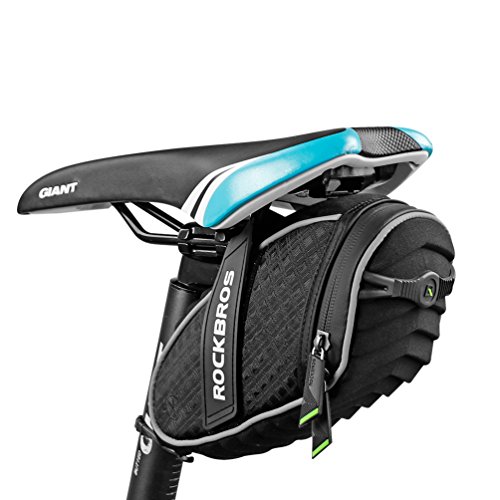
Saddle bags: compact storage under the seat
Also called seat bags or underseat bags, saddle packs fit beneath the saddle and typically attach to the saddle rails. REI recommends them for small essentials: a multi-tool, spare tube, tire levers, a patch kit or an energy bar. Keeping one mounted means you never leave home without basic repair items.
Larger bikepacking-specific seat bags can hold light, bulky gear, and REI’s bikepacking article lists them as a typical choice for enthusiasts who want to avoid panniers on narrow trails. REI suggests looking for a seat bag with a quick-release mounting bracket rather than buckles or rip-and-stick straps. If you are building a flat-fix kit to stash inside, our roadside repair kit guide can help you decide what to pack.
Frame bags: low center of gravity
A frame bag fits inside the main triangle formed by the top tube, seat tube and down tube. REI’s bag guide says this position is ideal for stowing heavy items because it keeps the bike’s center of gravity low.
Some frame bags fill nearly the entire triangle; others leave room for bottle cages. REI notes that larger frame bags can hold a hydration reservoir, but they may prevent you from mounting bottle cages inside the triangle. Bikepacking enthusiasts often use a frame bag for heavy items such as water, food or tools, according to REI’s bikepacking overview. If you are curious about the full bikepacking bag system, read our bikepacking bags guide.
Top-tube bags: snacks and small items at your thumb
REI’s bikepacking article mentions a top-tube bag, sometimes called a gas tank or bento box bag, as a spot for snacks or a camera. It appears in REI’s list of bags favored by bikepacking enthusiasts who skip panniers on singletrack.
Panniers: roomy, weather-resistant and rack-mounted
Panniers attach to front or rear cargo racks using spring-loaded hooks, clips or bungee cords, and they can be used singly or in pairs. REI describes them as a top pick for carrying everyday essentials, extra clothes and camping gear on commutes, urban rides and long-distance tours. Rear racks are usually rated for loads between 20 and 50 pounds, with some heavy-duty touring models carrying up to 80 pounds.
Because panniers sit beside the wheel, REI warns riders to check heel clearance when mounting them. A bag that is too large or mounted too far forward can catch your heel and create an unsafe situation. Front panniers mount to a front rack, but REI notes that adding weight to the front wheel can affect steering and balance; a low-rider rack keeps that weight closer to the ground for better handling. For a deeper look at rack and bag pairing, see our pannier selection guide and our bike rack types overview.
Trunk bags and baskets: alternatives for shorter trips
A trunk bag straps to a rear rack and sits on top of it. REI positions trunk bags as a middle ground: smaller than a pannier but larger than a seat bag, useful for a jacket, tools and lunch. Many have plastic sheets in the base to hold their shape
Baskets mount on the front or rear and work well for grocery bags or loose items on fair-weather rides, according to REI. Rear baskets usually sit on either side of the rear wheel and can carry tall loads because they have no lid. Front baskets tend to be smaller and often hang from the handlebars or anchor to the fork with metal stays.
Comparison at a glance
The table below summarizes where each bag type mounts and what it is good for, based on REI’s descriptions. Use it to narrow your choices before diving into the details.
| Bag type | Where it mounts | Good for |
|---|---|---|
| Handlebar bag | Handlebars (clamps or straps) | Frequently used items: camera, sunscreen, snacks, map |
| Saddle bag | Under seat (saddle rails) | Small essentials: multi-tool, spare tube, tire levers, patch kit |
| Frame bag | Main triangle (top tube, seat tube, down tube) | Heavy items: hydration bladder, food, tools; keeps weight low |
| Top-tube bag | Top tube | Snacks, camera, small grab-and-go items |
| Panniers | Front or rear rack (hooks, clips or bungees) | Everyday essentials, extra clothes, camping gear; roomy and weather-resistant |
| Trunk bag | Rear rack (top) | Jacket, tools, lunch; smaller than panniers, larger than a seat bag |
| Basket | Handlebars, fork or rear wheel sides | Grocery bags, loose items on fair-weather rides |
Features that matter across bag types
REI’s bag guide highlights a few features to weigh no matter which style you pick. Water resistance is one: if you ride in rain or road spray, look for a bag rated as waterproof rather than water resistant. Waterproof bags use a rubberized material, and many have a roll-top closure to seal out moisture.
Adjustability helps when your load changes. Some bags use compression straps or expandable collars so unused space does not flap in the wind or let cargo shift. Attachment security is critical, because a load that moves unexpectedly can cause a loss of control. Panniers that disconnect quickly with spring-loaded hooks are convenient if you park in public areas and want to take your gear with you.
How bikepacking changes the bag equation
REI’s bikepacking introduction explains that riders on singletrack trails often skip panniers because their width makes them vulnerable to damage on narrow paths. A rear rack may be left behind to save weight and reduce the chance of mechanical failure. Instead, enthusiasts rely on a large seat bag for light, bulky items, a handlebar bag or dry bag for moderate-weight gear, a frame bag for heavy items, and a top-tube bag for snacks. Some riders also add an extra water bottle cage under the downtube or on the fork.
Beginners can start with a simpler setup: a daypack for light or vibration-sensitive items, a dry bag secured to a rear rack for heavier gear, a handlebar bag, and water bottle cages. Panniers and bike trailers are optional for heavier loads or group gear. REI emphasizes that most of the weight should be placed as low as possible on the bike to improve handling and comfort. If you are assembling a full bikepacking kit, our bikepacking bags guide walks through the system in more depth.
Loading and everyday use
REI’s tips come down to two habits: make sure bags attach securely, because loads that are not secured can shift unexpectedly and cause a loss of control, and keep most of the weight as low as possible on the bike. If you commute in a city, pair your bag choice with good locking practices; our bike locking guide covers techniques for the bike itself.
Frequently asked questions
Can I use a handlebar bag and a front rack at the same time?
REI covers the two separately. It notes that a front rack adds weight to the front wheel and can affect steering and balance, and that a handlebar bag should not be overloaded or get in the way of the brakes and shifters, so keep both loads light if you combine them.
Do I need a special rack for panniers?
Panniers are designed to attach to front or rear cargo racks. REI states that rear racks are usually rated for 20 to 50 pounds, with some heavy-duty models carrying up to 80 pounds. Front racks come in standard top-mount and low-rider styles. Always match the pannier to the rack type and check heel clearance after mounting.
What is the difference between a frame bag and a top-tube bag?
According to REI, a frame bag fills the main triangle of the bike and is meant for heavier items such as a hydration bladder or tools. A top-tube bag is smaller, straps to the top tube near the stem, and is used for snacks or a camera. Both keep gear within easy reach, but the frame bag carries more weight and sits lower.
Ready to explore specific bag styles? Browse our bags and storage category for detailed guides on handlebar bags, panniers, frame bags and more.