 By Caleb Morgan
Updated November 2026
Photochromic reader cycling glasses combine two functions in one frame: lenses that darken in sunlight and lighten indoors or in shade, plus built-in magnification for close-up tasks like reading a bike computer or checking a map. This guide walks you through how the lenses behave, how to choose the right power and tint, how to fit the frame to your face and helmet, and what to watch for before you buy. By the end, you will know which specs matter for your riding conditions and how to avoid the most common mistakes.
How Photochromic Lenses Work on the Bike
Photochromic lenses contain molecules that change shape when exposed to ultraviolet light. In bright sun they darken, and when UV drops off they return to a lighter state. For cycling, this means one pair can handle a sunny climb, a shaded forest descent, and an overcast ride home without swapping lenses.
Shopping for one? See our guide: 6 Best Photochromic Cycling Glasses: Picks for Changing Light (2026).
Two performance points matter most. First, activation speed: lenses usually take a short interval to darken and a longer interval to clear, and the clearing time is often the more noticeable one when you ride from sun into a tunnel. Second, the light range the lenses cover. Many photochromic lenses reach their darkest state only in strong UV, so they may stay relatively light behind a windshield or on a cloudy day. Manufacturers typically specify a light transmission range for each tint, and it is worth checking that range against your typical conditions.
Temperature also plays a role. Photochromic response tends to slow in cold weather and can feel sluggish on winter rides. Riders who train in the cold often report that the lenses stay lighter than they expected at the start of a ride.
Understanding Reader Power and Why It Matters on a Bike
Reader lenses add magnification for near focus, usually measured in diopters such as +1.00, +1.50, +2.00, and +2.50. Most cyclists who need readers for their bike computer or phone map fall somewhere between +1.00 and +2.00, but the right number depends on your age, your current prescription, and how far away the display sits when you ride.
Here is a simple way to estimate your starting point. Hold your bike computer at the distance where you normally view it on the handlebars, typically 16 to 24 inches for most riders. Try reader strengths on a neutral surface and note which strength gives you the sharpest text at that distance. Do not choose a power based only on the strength of drugstore reading glasses you already own, because cycling glasses sit at a different distance and angle than desk reading glasses.
Checking Your Field of View
Single-vision reader cycling glasses apply one magnification across the whole lens. Bifocal or progressive designs add a near zone at the lower part of the lens. For cycling, many riders find single-vision readers simpler, because the near zone sits in an awkward place when you are looking down toward the road. If you ride with a progressive, check that the near zone position works with your normal head angle on the drops and hoods.
Step-by-Step: Choosing the Right Pair
- Confirm your reader power. Test your bike computer distance with a few reader strengths and pick the one that gives crisp text.
- Decide between single-vision and bifocal. Single-vision is usually simpler for cycling; bifocal or progressive suits riders who need distance and near correction together.
- Choose a photochromic tint range. Look for lenses that darken well in your typical sun and lighten enough for shaded or overcast rides.
- Check the frame fit. The frame should sit close to the face without pressing on the nose, and the temples should not push the helmet strap out of position.
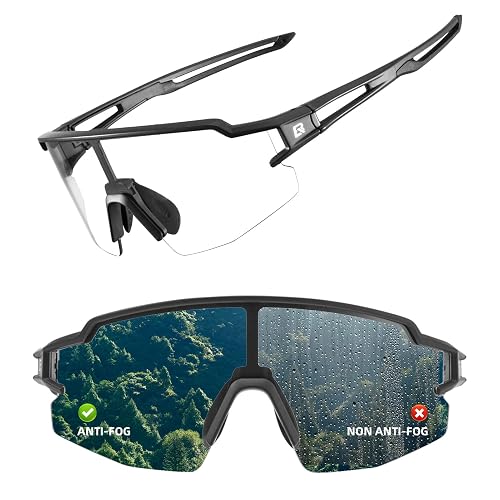
- Match the lens to your riding environment. Consider wrap coverage for wind and debris, and anti-fog features for humid or cold rides.
- Test the fit with your helmet on. Clip the helmet, look down at the computer, and check that the lens does not shift or fog.
Measuring Your Pupillary Distance
Pupillary distance, or PD, is the distance between the centers of your pupils in millimeters. Accurate PD keeps the optical center of each lens aligned with your eyes, which reduces eye strain on longer rides. Many online providers ask for PD when you order reader or prescription lenses. Measure it with a mirror and a ruler held against your brow, or have an optician check it. If you are unsure, consult an eye care professional before ordering custom powers.
Fit, Coverage, and Helmet Compatibility
A cycling frame has to handle wind, road spray, and helmet geometry. Wrap-style frames protect the sides of the eyes but can make magnification harder to place correctly, so check the optical center carefully. Frames that sit too far from the eye can produce blur at the edges, while frames that sit too close can press on lashes or cheekbones.
Pay attention to the temple arms as well. Thin temples that hook behind the ear can work well under most helmets, but thick temples may push the helmet strap out of place. Try the glasses on with the helmet you plan to ride in, adjust the strap, and check that the glasses stay put when you shake your head.
Lens Coverage Checklist
- Full wrap or near-wrap coverage for wind and debris
- Anti-fog coating or vented frame design for humid rides
- Scratch-resistant coating for trail or gravel use
- Nose pads or adjustable pads that do not slide during sweaty rides
- Lens shape that allows comfortable head movement when checking traffic
Common Mistakes to Avoid
- Choosing reader power from desk glasses. Desk distance differs from handlebar distance, so test at your riding distance.
- Ignoring tint range. A tint that only darkens in harsh sun may leave you squinting on cloudy or wooded routes.
- Skipping the helmet test. A frame that fits well alone can shift once the helmet is on.
- Overlooking PD. Incorrect pupillary distance can cause eye strain, especially on long efforts.
- Expecting instant transitions. Photochromic lenses take time to change, which can matter in tunnels or dense tree cover.
Tips for Getting the Most From Your Glasses
- Keep a spare, lightly tinted pair for low-light or night rides instead of relying on photochromic lenses alone.
- Clean lenses with a microfiber cloth and water, since dust and sweat residue can reduce clarity.
- Store glasses in a hard case during the ride to protect the reader lenses from impact.
- If you wear a prescription, ask about reader or prescription inserts that can be added to your existing cycling frame.
For more background on lens options and frame choices, see Photochromic Glasses for Cycling: 6 Best Picks for Changing Light (2026) and Cycling Glasses with Readers: 7 Steps to Choose the Right Pair. If you ride in wet conditions, Cycling in the Rain with Glasses: 7 Steps for Clear Vision on the Bike covers fog and spray. Riders who need full prescriptions may find Prescription Insert Cycling Glasses: How to Get Them Right useful, and Cycling Glasses Photochromic Lenses: How to Choose and Use Them in 2026 explains tint behavior in more detail.
Recommended gear
A few supporting items can make reader photochromic glasses more practical on the bike:
- A microfiber lens cloth keeps the lenses clear of sweat and road dust without scratching the coating. View on Amazon
- A hard protective case protects reader lenses from crushing in a jersey pocket or bag. View on Amazon
- A pupillary distance ruler helps you measure PD at home before ordering custom reader or prescription lenses. View on Amazon
FAQ
What reader strength do I need for cycling glasses?
Most riders who need readers for a bike computer fall between +1.00 and +2.00 diopters. Test different strengths at your normal handlebar viewing distance, since desk reading strength may not match.
Do photochromic lenses work in the rain?
Yes, but darkening depends on UV levels. Rainy, overcast conditions usually keep photochromic lenses light, so a clear or lightly tinted pair often works better in wet weather.
How long do photochromic lenses take to change?
Activation and clearing times vary by lens and temperature. Clearing usually takes longer than darkening, so expect a short delay when moving from sun into shade.
Can I get photochromic lenses with a prescription?
Many optical labs offer photochromic prescription lenses, and some cycling frames accept prescription inserts. Confirm lens availability with the manufacturer or an eye care professional before ordering.
Are bifocal cycling glasses good for riding?
Bifocals can work well for riders who need both distance and near correction, but the near zone position needs checking against your head angle on the bike. A brief test ride is a good idea.
How do I stop reader cycling glasses from fogging?
Choose a frame with anti-fog treatment or venting, and avoid touching the lens interior. Fog usually increases in cold, humid conditions when your breathing meets the cooler lens surface.
Should I see an eye doctor before buying reader cycling glasses?
If you have eye disease, significant astigmatism, or changes in vision, consult an eye care professional before choosing magnification. A proper exam can confirm the correct power and rule out problems that readers will not fix.
Conclusion
Photochromic reader cycling glasses can simplify your riding setup by handling changing light and close-up viewing in one frame. Focus on accurate reader power tested at your handlebar distance, a tint range that suits your typical conditions, and a fit that works with your helmet. Measure PD carefully if you order custom lenses, and check with an eye care professional when your vision needs go beyond simple magnification.
Ready to choose one?
About Caleb Morgan
Caleb Morgan is part of our editorial team and reviews and edits our cycling apparel & tech guides, checking product details against manufacturer specifications and owner feedback.






Write Your Review
No reviews yet. Be the first to share your experience!