 By Caleb Morgan
Updated November 2026
Cycling glasses with photochromic lenses adjust their tint automatically as light conditions change, so you can ride from a shaded forest trail into bright open road without swapping pairs. This guide explains how photochromic lenses work, what to check before you buy, how to match them to your riding, and how to avoid the mistakes that leave riders squinting or underprotected. By the end, you will know how to pick a pair that fits your face, your routes, and your eyes.
What Photochromic Lenses Do on the Bike
Photochromic lenses contain molecules that change shape when exposed to ultraviolet light. Under UV, the molecules darken the lens. When UV drops, as in shade or at dusk, the molecules relax and the lens lightens. Manufacturers typically describe this as a transition between a light and a dark state, with the darkest level reached within a few minutes of strong sun exposure.
Shopping for one? See our guide: 9 Best Photochromic Cycling Glasses for Changing Light (2026).
For cyclists, the practical benefit is consistency. Riders often move between open sun, tree cover, tunnels, and overcast conditions within a single outing. A fixed-tint lens that suits midday sun can feel too dark under cloud, while a light lens that works in shade can leave you squinting in full glare. Photochromics aim to narrow that gap.
Keep in mind that photochromic response depends on UV, not visible light alone. Some lenses react less inside a car or behind certain windshields, and they may not darken fully on overcast days because UV is still present but reduced. Check the manufacturer’s stated response range rather than assuming all photochromics behave the same way.
Step 1: Decide Which Light Conditions You Ride In Most
Before comparing lens models, map out your typical rides. Photochromic lenses are not all tuned to the same range of darkness, so the right choice depends on where you spend the most time.
- Log your last five or six rides. Note the start and end times, the terrain, and whether you were mostly in sun, shade, or mixed conditions.
- Identify your extremes. If you ride dense forest at 7 a.m. and exposed highway at noon, you need a lens with a wide light-to-dark range.
- Note low-light riding. Dawn, dusk, and night riding require a lens that stays fairly clear. Many photochromic lenses never get fully clear, so check the lightest state.
- Consider weather. Frequent overcast or rain riders benefit from lenses that lighten well indoors and under cloud, since those conditions can otherwise feel dim.
Step 2: Check the Lens Category and Light Transmission
Lens categories are the most useful way to compare tint levels. Cycling eyewear is usually graded by visible light transmission, the percentage of visible light that passes through the lens in its current state. A lower percentage means a darker lens. For photochromics, the manufacturer should list both the lightest and darkest states.
| Lens Scenario | Typical Darkness Need | What to Look For in a Photochromic |
|---|---|---|
| Dense forest, dawn, dusk | Light to moderate | Clear or near-clear light state, good contrast |
| Mixed sun and shade | Moderate | Wide range that darkens and lightens smoothly |
| Open road, high summer sun | Dark | Deep darkest state, UV and glare control |
| Snow, glacier, or high altitude | Very dark | Dark state suitable for intense brightness |
Read the category or transmission figures on the product page rather than relying on marketing terms like “all-conditions.” A lens that is only dark enough for mild sun may not be suitable for high-altitude or desert riding.
Step 3: Confirm UV Protection and Impact Rating
Photochromic darkening is not the same as UV protection. Some tinted lenses offer little UV filtering on their own, so confirm the manufacturer states UV400 or full UV absorption across the lens. Also check for an impact standard such as ANSI Z87.1 or CE EN 166, which indicates the lens has been tested for impact resistance. Cycling glasses that are not rated for impact are not a safe substitute for protective eyewear in conditions where debris or crashes are a risk.
If you ride on gravel, mountain trails, or in traffic, impact rating matters more than tint. Choose a lens that meets a recognized standard before you consider style or color.
Step 4: Test Fit, Coverage, and Lens Shape
Even the best photochromic lens will underperform if the frame lets light leak in from the sides or above. Look for wraparound designs with a curved lens that sits close to the face. A wider lens reduces side glare and helps block wind, which matters at speed.
- The bridge should sit comfortably on your nose without pinching.
- Temple arms or the strap system should hold the frame steady without digging in at the ears.
- When you look down into the drops, the lower edge should not press on your cheeks or fog from breath.
- If you wear a helmet, check that the arms or frame sit under the helmet straps without shifting.
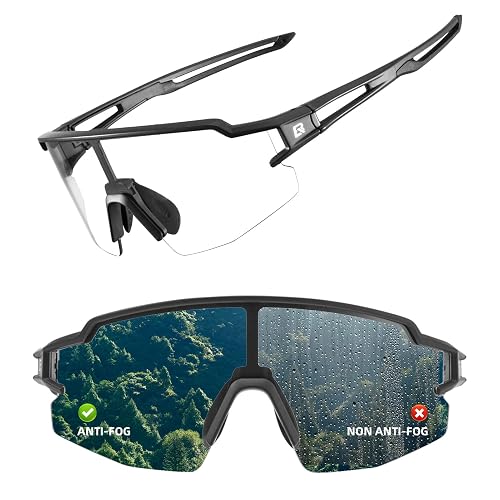
Ventilation is important as well. Frames with vents or gaps help reduce fogging, particularly on climbs or in cool, humid weather. Some riders prefer a slightly lifted frame to reduce heat under the lens.
Step 5: Plan for Prescription Needs
If you wear corrective lenses, you have three main options: a prescription insert that clips into the frame, a frame made to accept a custom prescription, or a pair of photochromic glasses with a prescription lens ground into the sport frame. Each has trade-offs in weight, fit, and cost of replacement.
Inserts are often the most flexible because you can keep the sport frame and swap prescriptions later. Custom prescription frames can give a cleaner optical field but may be harder to replace. Whichever route you choose, have your current prescription checked by an eye care professional and confirm that the lab can produce photochromic prescription lenses in the same category you selected.
Step 6: Test in Real Conditions
Before committing to a pair, run a short test. Ride from shade into sun and back. Note whether the lens darkens quickly enough to prevent squinting and whether it lightens fast enough when you enter a tree-lined section. Pay attention to color perception. Some photochromic lenses shift color slightly as they darken, which can affect how you read contrast on painted road surfaces or trail features.
If the retailer offers a return window, use it to test the glasses on your usual route. Many riders find that the first ride reveals fit issues that were not obvious in the store.
Common Mistakes
- Assuming photochromics work like sunglasses in a car. Most car windshields filter much of the UV that triggers darkening, so the lenses may stay lighter than expected while driving to the trailhead.
- Choosing the darkest possible lens. A very dark photochromic can be hard to use at dusk or in forest shade, where clarity matters for spotting roots, potholes, and riders ahead.
- Skipping impact ratings. Tint and style do not indicate protection. Check for a recognized impact standard.
- Ignoring fog. A lens that tints well but fogs on climbs will frustrate you quickly. Look for vents and anti-fog coatings.
- Buying without a fit check. Frames that slide down the nose or press on the cheeks will change how you ride and how often you adjust them.
- Forgetting replacement lenses. Scratches and lens wear reduce clarity. Check whether replacement lenses are available for your frame.
Tips for Getting the Most from Photochromic Lenses
- Carry a microfiber cloth and clean the lenses with water before wiping, since grit can scratch the coating.
- Store the glasses out of direct sun in a case when not in use, so the lenses can return to their lightest state between rides.
- If you ride in very cold weather, expect slower transitions. Photochromic response can slow at low temperatures.
- Keep a clear or yellow-tinted backup pair for night and very low-light rides, since most photochromic lenses are not designed for darkness.
- Check lens condition regularly. Cracks, deep scratches, or coating wear are reasons to replace the lens, not to keep riding.
Recommended Gear
- Oakley Jawbreaker: A widely known wraparound sport frame that owners often pair with photochromic or prescription lens options, useful for riders who want a secure fit and interchangeable lens choices. View on Amazon
- Tifosi Synapse: A sport frame in the Tifosi range that riders often choose for a lighter feel and budget-friendly photochromic options. View on Amazon
- Smith Prescription Insert Frame: A sport frame designed to accept prescription inserts, helpful if you want corrective vision without giving up a wraparound fit. View on Amazon
- Microfiber lens cloth with protective case: A basic accessory that keeps photochromic lenses clean and protected between rides. View on Amazon
For more detailed comparisons, see Photochromic Glasses for Cycling: 6 Best Picks for Changing Light (2026) and Cycling Glasses Transition Lenses: How to Choose the Right Pair in 7 Steps. If you need corrective lenses, Prescription Insert Cycling Glasses: How to Get Them Right explains the setup process.
FAQ
Do photochromic lenses work in a car?
Often not as well as riders expect. Most windshields block much of the UV that triggers darkening, so the lenses may stay lighter while you drive. Plan for this if you rely on them for the drive to your ride.
Are photochromic lenses good for night riding?
Generally no. Most photochromic lenses do not become fully clear, and they are not designed for low light. Use a clear or yellow lens for night riding.
How long does it take for photochromic lenses to change?
Manufacturers typically describe darkening within a few minutes of UV exposure, with lightening taking somewhat longer. Exact times vary by brand, temperature, and lens design.
Do photochromic lenses wear out?
The photochromic response can decline over time, especially with heavy use and heat exposure. Replace lenses if they no longer transition well or show coating damage.
Can I get photochromic lenses with a prescription?
Yes. You can order prescription photochromic lenses for some sport frames or use prescription inserts. Confirm with the lab or retailer that the chosen lens category is available in your prescription.
Are photochromic lenses safe for eye protection on the road?
They can be, provided they meet a recognized impact standard and offer full UV protection. Check the product specifications and, if you have eye concerns, consult an eye care professional.
Why do my lenses look slightly different in color?
Many photochromic lenses shift tint as they darken, which can change how colors appear. This is normal, but if color distortion affects your ability to read the road, consider a different lens type.
Conclusion
Cycling glasses with photochromic lenses can simplify riding across changing light, but only if the lens category, UV protection, impact rating, and fit match your routes. Start by mapping your typical conditions, then compare tint ranges and frame coverage. Test the glasses on a real ride when you can. A careful choice now will save you from squinting, fogging, and frequent lens swaps later.
Related reading
- Kapvoe Photochromic Cycling Glasses: 7 Best Picks for Changing Light (2026)
- Cycling Glasses Interchangeable Lenses: 7 Best Picks for Every Ride (2026)
- 9 Best Cycling Glasses Yellow Lenses for Low-Light Riding
- X Tiger Cycling Glasses: 6 Best Picks for Riders in 2026
Ready to choose one?
About Caleb Morgan
Caleb Morgan is part of our editorial team and reviews and edits our cycling apparel & tech guides, checking product details against manufacturer specifications and owner feedback.









Write Your Review
No reviews yet. Be the first to share your experience!