 By Logan Fleming
The best cycling glasses reddit threads tend to recommend are rarely the ones with the flashiest marketing. Instead, riders on forums like r/cycling and r/bikewrench usually point to a short list of criteria: lens clarity in changing light, fit under a helmet, fog resistance, and whether the frame stays put at speed. This guide walks you through how to weigh those factors so you can shortlist glasses that suit your riding, rather than copying someone else’s favorite.
What Riders on Reddit Usually Get Right (and Wrong)
Reddit discussions about cycling eyewear are useful because they surface real complaints: lenses that streak in rain, temples that pinch after an hour, or frames that slide down on sweaty climbs. Owners often report that the most helpful comments describe specific conditions, such as “dawn rides on wet roads” or “gravel with dust and branches,” instead of general praise. That detail matters more than any single brand name.
Shopping for one? See our guide: 7 Best Cycling Glasses with Prescription for Road Riders (2026).
Be cautious with brand loyalty and one-off anecdotes. A pair that one rider loves may suit a narrow face shape or a particular helmet. Treat recommendations as leads to verify, not final answers.
Step 1: Define Your Riding Conditions
Start by listing where and when you ride most. Lens needs differ sharply between a summer road ride at midday and a 6 a.m. commute in November. Write down your three most common conditions before you look at any product.
- Bright, open road: Dark or mirrored lenses with high UV protection and good contrast.
- Changing light or tree-lined routes: Photochromic or multi-tint lenses that adjust over time.
- Dawn, dusk, or night: Clear or yellow lenses that boost contrast in low light.
- Gravel and trail: Impact-rated lenses and wraparound frames to block dust, grit and branches.
- Wet or cold weather: Anti-fog coatings and ventilation that doesn’t let air blow straight onto the lens.
Step 2: Choose the Right Lens Color and Tint
Tint is about how much visible light reaches your eyes and how well you see contrast. Darker tints reduce glare but can make shadows and potholes harder to read. Lighter or colored tints can improve contrast without cutting too much light.
| Lens Type | Best Conditions | Trade-off |
|---|---|---|
| Dark gray or smoke | Bright sun, open roads | Reduced contrast in shade |
| Mirrored | Intense glare, snow, water | Can look reflective to others |
| Photochromic | Mixed light, variable weather | Slow to adjust in some tunnels or cars |
| Yellow or amber | Dawn, dusk, overcast | Color shift can be distracting in bright light |
| Clear | Night, indoor trainers, heavy overcast | No glare reduction |
If you ride across a wide range of conditions, a single photochromic pair or a set with interchangeable lenses is often more practical than owning several separate pairs. For a deeper look at adjusting lenses, see 9 Best Photochromic Cycling Glasses for Changing Light (2026).
Check UV and Impact Ratings
Look for lenses that block close to 100 percent of UVA and UVB and that carry an impact-resistance rating, such as ANSI Z87.1 or CE EN166. Manufacturers specify these standards on packaging or spec sheets. Don’t assume a dark tint means UV protection; the two are separate features.
Step 3: Test the Fit Under Your Helmet
Fit is where many Reddit threads turn into complaints. Temples that are fine on their own can press against helmet straps, and a frame that sits too high can slide on the nose during climbs. Before you commit, try the glasses with the helmet you actually ride.
- Put on your helmet and fasten the chin strap as you would for a ride.
- Slide the glasses on and check that the temples sit above or behind the helmet straps, not pinched under them.
- Shake your head side to side and nod gently. The frame should stay in place.
- Check the bottom edge. It should sit comfortably on your cheeks without pressing into your nose bridge.
- Look down at a 45-degree angle. If the lens rim blocks your view of the road, the frame is too deep.
For more on matching frames to head shape, the guide to 7 Best Cycling Glasses for Small Faces (2026) covers narrow-fit options, and Best Women's Cycling Glasses: 6 Factors for a Better Fit (2026) addresses fit for a wider range of face shapes.
Step 4: Evaluate Fog Resistance and Ventilation
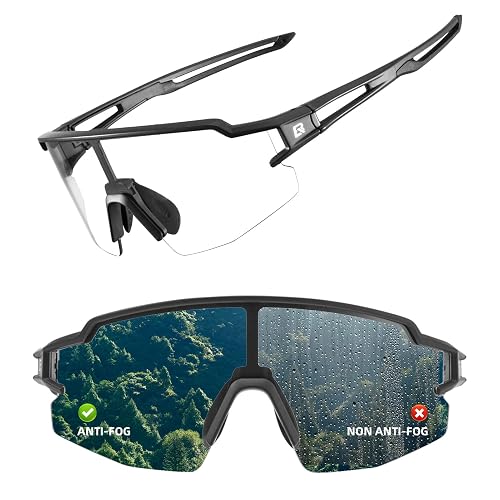
Fog is the most common complaint in cold-weather threads. It happens when warm, humid air from your face condenses on a cooler lens. Good designs combine anti-fog coatings with vents that let air move across the lens surface. Owners often report that a coating alone is not enough on a hard climb in cool air, so look for both features together.
If fogging is your main concern, compare options in 7 Best Cycling Glasses Anti Fogs for Road and Trail Riders (2026).
Step 5: Consider Prescription Needs
If you wear corrective lenses, you have three main routes: prescription-ready frames with lens inserts, clip-on inserts that fit behind a standard lens, or fully prescription sports glasses. Each has trade-offs in weight, cost of replacement and optical quality. An eye care professional should confirm your prescription and the lens type that suits your vision.
Several rider discussions focus on whether to use clip-ons or inserts. Our comparison in Prescription Sports Glasses Cycling vs Clip-On Inserts: Which Should You Choose? lays out the differences, and Prescription Insert Cycling Glasses: How to Get Them Right explains the ordering process.
Step 6: Think About Accessories and Extras
Some riders on Reddit swear by mirrors that clip to the frame for road awareness, while others prefer a heads-up display for navigation. These add-ons change what you need from the frame itself. Mirror-compatible frames, for example, need a mounting point that many standard designs lack.
- Interchangeable lens kits for rapid changes in light
- Soft cases to prevent scratches during transport
- Retention straps or a secure hold on the temples for off-road use
- Compatibility with a mirror or display if you use one
If a mirror is part of your setup, see 7 Best Cycling Mirrors for Glasses for Road and Trail Riders (2026).
Step 7: Shortlist, Then Verify
Once you’ve applied the factors above, narrow your list to three pairs. Check the manufacturer’s spec sheet for lens categories, UV rating, frame weight and warranty terms. Then read recent owner reviews, filtering for riders whose conditions match yours. A review from someone who rides gravel in dust tells you more than a general five-star comment about comfort.
For ideas on specific use cases, compare 8 Best Cycling Glasses for Night Riding: Expert Picks Compared and 8 Best Clear Cycling Glasses for Low Light and Night Riding.
Common Mistakes
- Buying the darkest lens by default. Dark tints hide potholes and cut contrast in shade. Match tint to your most frequent light.
- Skipping the helmet fit test. Temples that look fine in a store can pinch under straps on the road.
- Ignoring the second-most-common ride. Many riders own one dark pair and then struggle at dawn or on wet days.
- Assuming anti-fog means fog-proof. Coatings help, but ventilation and proper fit matter as much.
- Trusting one thread. Look for patterns across several comments, not a single enthusiastic post.
Recommended gear
Rather than a single “best” model, these categories cover the needs most Reddit threads raise. Compare current listings against the criteria above.
- Photochromic cycling sunglasses: Useful for riders who go from sun to shade often, because the lenses adjust without a swap. View on Amazon
- Interchangeable lens cycling glasses kit: Lets you carry a dark, clear and yellow lens for different conditions in one frame. View on Amazon
- Anti-fog cycling glasses: Helpful for cold, humid rides where fogging is the main complaint. View on Amazon
- Cycling glasses with prescription insert: Built for riders who need corrective lenses behind a sport frame. View on Amazon
FAQ
What do most people recommend for a single pair of cycling glasses?
Riders who want one pair usually suggest a photochromic or a medium-dark lens with a clear second option. This covers most daytime conditions without leaving you unprepared at dawn or dusk.
Are clear lenses good for cycling?
Clear lenses protect your eyes from wind, debris and insects, and they are useful for night riding or heavy overcast. They offer no glare reduction, so they are not a substitute for a tinted lens in bright sun.
How do I stop my glasses from fogging?
Choose a pair with an anti-fog coating and vents that move air across the lens. Avoid wearing glasses that sit tightly against the face, and consider a clean, lightly moisture-treated lens for cold rides.
Do I need UV protection in cloudy weather?
Yes. UV rays pass through clouds, so lenses with full UVA and UVB protection are worth having even on overcast days.
Can I wear cycling glasses under a helmet?
Most riders can, but fit matters. Check that the temples do not press under the helmet straps and that the frame stays stable when you move your head.
How do I know if a pair fits my face?
Test the glasses with your helmet on, shake your head, and look down at a steep angle. The frame should stay put and should not block your forward view.
Should I see an eye doctor before buying prescription cycling glasses?
Yes. An eye care professional can confirm your current prescription and recommend a lens type suited to your vision and activities.
Conclusion
The best cycling glasses for you depend on the light you ride in, how the frame fits your helmet, and whether you need fog control or prescription lenses. Work through each factor, shortlist three candidates, and verify them against owner feedback from riders who match your conditions. Taking that approach will get you more useful answers than any single thread.
Ready to choose one?

About Logan Fleming
Logan puts together our cycling apparel & tech guides, digging through specifications, manufacturer details and owner reviews so you don't have to.




Write Your Review
No reviews yet. Be the first to share your experience!