 By Logan Fleming
Tifosi clear cycling glasses are a practical choice for riders who want eye protection without a tinted lens changing how they see the road. This guide walks through the factors that matter most, from lens clarity and impact rating to frame fit and prescription compatibility, so you can narrow the field to a pair that suits your riding conditions. By the end, you will know what to look for on the spec sheet and how to test a pair before you commit to it.
Step 1: Decide Where and When You Will Ride
Clear lenses are the default for low light, overcast days and early-morning or evening rides. Because they transmit close to 100 percent of visible light, they do not darken the scene the way a smoke or grey lens does. That makes clear lenses a sensible choice for commuters and night riders, but it also means they offer no glare reduction in bright sun. If most of your riding happens in full daylight, you may want a tinted or interchangeable lens system alongside a clear set. If you ride mostly at dawn, dusk or indoors on a trainer, clear lenses will likely be the lens you reach for most often.
Step 2: Check the Lens Material and Impact Rating
Most cycling eyewear uses either polycarbonate or a similar impact-resistant polymer. Manufacturers typically specify compliance with a safety standard such as ANSI Z87.1 or a comparable European benchmark, which covers impact resistance for flying debris and road grit. Look for that certification on the product page or packaging rather than relying on marketing language like “shatter resistant.” Also check whether the lens is listed as UV400 or as blocking 100 percent of UVA and UVB. Clear lenses still need UV protection, because eye damage from sun exposure does not depend on tint.
Lens Coatings to Look For
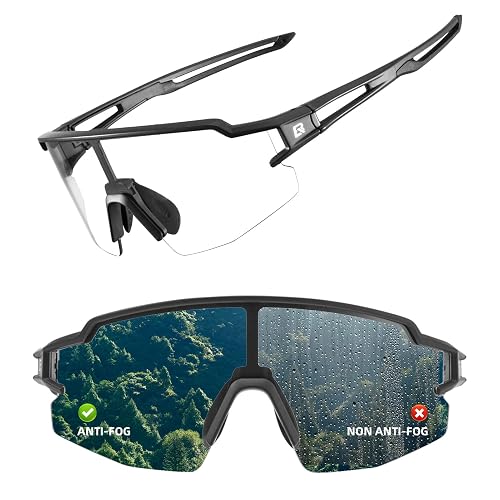
- Anti-fog treatment: A hydrophilic or dual-layer coating helps reduce condensation during climbs and when riding in humid or cool conditions.
- Hydrophobic or water-repellent coating: This helps rain and sweat bead and roll off rather than smearing across the lens.
- Scratch-resistant hard coat: Useful if you store your glasses loose in a jersey pocket or bag.
Step 3: Evaluate Frame Fit and Coverage
A good fit matters more than any single spec. Start by checking the frame’s overall width and the lens height, which are usually listed in millimeters on the product page. Frames that are too narrow will press on the temples and may slide down during a sprint, while frames that are too wide will let wind and debris reach the eyes. Coverage around the sides of the eye is especially important for road riding at speed, where cross-breezes and grit can come in from every direction.
| Fit Factor | What to Check | Why It Matters |
|---|---|---|
| Frame width | Lens width and bridge width in mm | Determines how the frame sits across the face |
| Temple length | Arm length from hinge to tip | Affects stability under a helmet strap |
| Nose pad style | Fixed or adjustable pads | Controls how the glasses sit on the bridge of the nose |
| Lens height | Vertical lens dimension | Influences coverage when looking down into the drops |
| Grip | Rubberized temple or nose contact | Helps the frame stay in place when sweating |
Testing Fit Before You Ride
- Put the glasses on with your helmet fastened, since the helmet changes how the arms sit.
- Shake your head side to side and nod up and down. The frame should stay put without digging in.
- Look down at the handlebars in your normal riding position. Check that the lower edge of the lens does not block your view of the front wheel.
- Check for pressure points at the temples and bridge after about 15 minutes of wear.
Step 4: Plan for Prescription Needs
If you wear corrective lenses, you have several routes. Some riders use a frame with a prescription insert that clips or sits behind the main lens. Others prefer full prescription sports lenses ground to their numbers. A third option is wearing contact lenses under clear cycling glasses. Each approach has trade-offs in weight, optical clarity and cost, so it helps to compare them before buying. Consult an optometrist or eye care professional before ordering prescription lenses, especially if you have astigmatism or a prescription that changes often.
Step 5: Consider Clip-On and Interchangeable Lens Options
Interchangeable lens systems let you swap clear lenses for tinted ones depending on conditions, which can be useful if your riding spans dawn, midday and dusk. Check how the lenses attach and detach, and whether the replacement lenses are sold separately. Some riders keep a clear lens in a jersey pocket for the evening ride home. Just confirm that the lens you buy matches your specific frame model, since not every lens fits every frame in a given line.
Step 6: Compare Value Against Your Riding Frequency
Budget, mid-range and premium options all exist within most cycling eyewear lines. A budget pick may cover the essentials, while a premium option often adds better optical quality, lighter frames and more lens choices. If you ride several times a week, spending more on a well-fitting frame usually pays off in comfort. If you ride occasionally, a simpler pair may be enough. Read owner reviews for comments on fit, fogging and durability over several months, since those reports tend to be more revealing than first-week impressions.
Checklist Before You Buy
- Lens is clear and labeled with UV400 or 100 percent UVA and UVB protection
- Impact standard such as ANSI Z87.1 is listed
- Anti-fog coating is included or available as an option
- Frame width and lens height suit your face and riding position
- Prescription pathway is confirmed, whether insert, Rx lens or contacts
- Replacement lens availability is confirmed for your frame
- Return policy allows fit testing on the bike
Common Mistakes
- Buying clear lenses for bright sun. Clear lenses offer no glare reduction, so pair them with a tinted option for daytime riding.
- Ignoring helmet compatibility. Temples that fit with no helmet may pinch or lift when a helmet is fastened.
- Skipping the anti-fog check. Fog can appear suddenly on hard climbs, so confirm the coating before you need it.
- Assuming all clear lenses are equal. Optical quality varies, and a lens with distortion can cause eye strain on long rides.
- Forgetting to clean lenses properly. Use a microfiber cloth and mild cleaner, since paper towels and shirt hems can leave micro-scratches.
Tips for Longer Life and Better Clarity
- Store glasses in a hard case when not riding to protect the lens surface.
- Rinse off grit before wiping, so particles do not drag across the lens.
- Replace the lens when scratches begin to affect your view, especially at night.
- Keep a spare clear lens in your bag if your model allows it.
Recommended Gear
- Microfiber lens cloth: Gentle on coatings and helpful for removing sweat and road dust without scratching. View on Amazon
- Hard protective case: Protects the lens and frame in a bag or pocket on the way to a ride. View on Amazon
- Anti-fog lens spray: Helps maintain the coating between washes, particularly for riders who train in cool or humid conditions. View on Amazon
For more on matching glasses to your riding conditions, see Safety Glasses for Cycling: How to Choose the Right Pair in 6 Steps and 8 Best Clear Cycling Glasses for Low Light and Night Riding. If you need corrective lenses, Prescription Insert Cycling Glasses: How to Get Them Right explains the options in more detail.
FAQ
Are tifosi clear cycling glasses good for night riding?
Clear lenses are generally the better choice for night riding because they let the maximum amount of ambient light reach your eyes. Pair them with a bright front and rear light setup, since eyewear does not replace visibility aids.
Do clear lenses protect against UV rays?
Clear lenses can and should carry UV protection. Check the product listing for UV400 or a statement that the lens blocks 100 percent of UVA and UVB. Tint is not required for UV protection.
How do I stop clear cycling glasses from fogging?
Choose a pair with an anti-fog coating, keep the vents open if the frame has them, and avoid wiping the inside of the lens with rough material. An anti-fog spray can help maintain the coating between washes.
Can I use prescription inserts with clear cycling glasses?
Many frames accept prescription inserts, though not all models do. Confirm compatibility with the manufacturer before ordering, and consult an eye care professional for accurate measurements.
How often should I replace clear cycling lenses?
Replace a lens when scratches or coating wear begin to reduce clarity, particularly if you notice glare or distortion. There is no fixed interval, since use and care vary widely.
Are clear lenses enough for all-day riding?
Clear lenses work well for overcast or low-light conditions, but they offer no glare reduction in bright sun. Many riders carry a tinted lens or an interchangeable option for midday rides.
What should I do if my glasses slide during hard efforts?
Check the temple grip and nose pad fit, and confirm that the helmet strap sits correctly. If slipping continues, an adjustable nose pad set or a model with stronger rubberized grip may suit your face better.
Conclusion
Choosing tifosi clear cycling glasses comes down to matching lens clarity, impact protection and fit to the riding you actually do. Start with your typical light conditions, confirm the safety and UV ratings, and test the frame with your helmet on. If you wear prescription lenses, confirm your insert or Rx pathway before buying. A careful check of these factors will give you a pair that stays comfortable and clear mile after mile.
Related reading
- 8 Best Women's Clear Cycling Glasses for Every Ride (2026)
- Prescription Sports Glasses Cycling vs Clip-On Inserts: Which Should You Choose?
- Pit Viper Cycling Glasses: How to Choose the Right Pair in 7 Steps
Ready to choose one?

About Logan Fleming
Logan puts together our cycling apparel & tech guides, digging through specifications, manufacturer details and owner reviews so you don't have to.




Write Your Review
No reviews yet. Be the first to share your experience!