 By Caleb Morgan
Updated November 2026
Choosing a bike computer with GPS comes down to a handful of practical questions: Do you need turn-by-turn directions or just accurate speed and distance? How long do your rides run before the battery needs topping off? Will the unit survive rain, mud and a bumpy trail? This list compares seven models against those criteria, focusing on navigation support, battery endurance, display and mounting, weather resistance, and how well each unit suits training versus touring. Specifications are drawn from manufacturer information and recurring owner feedback patterns, not from any testing of our own.
Our top picks at a glance
- 1
 TOP CHOICEBest overalliGPSPORT BSC500 GPS Bike Computer, 3.3'' Touch Screen MAP Voice NavigationView on Amazon
- 2
 TOP CHOICEBest for training dataGarmin Edge 540View on Amazon
- 3
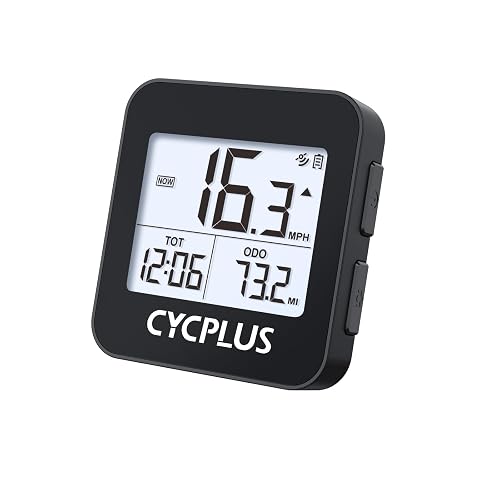 TOP CHOICEBest budget pickCYCPLUS G1 Wireless GPS Bike Computer, 70g, 2.0" Screen, IPX6, 1200mAhView on Amazon
- 4
 Best for route navigationGEOID CC700 2.8" Color Screen Bike/Cycling Computer WirelessView on Amazon
- 5
 Best for compact handlebar setupsiGPSPORT BSC200S GPS Bike Computer, Wireless Route Navigation 2.4'' ScreenView on Amazon
- 6
 Best for connected ecosystemsWahoo ELEMNT BOLT V3 Aero GPS Bike Computer with NavigationView on Amazon
- 7
 Best for simple speed and distanceBicycle Speedometer Odometer, Green Auto Backlight, Auto Start Stop, MView on Amazon
Our Top Picks
Quick Comparison
| Product | Best for | Key feature |
|---|---|---|
| iGPSPORT BSC500 GPS Bike Computer | Overall use with map navigation | 3.3-inch touch screen with voice navigation |
| Bicycle Speedometer Odometer Wireless GPS Bike Computer | Simple speed and distance tracking | Auto start/stop and altitude and gradient data |
| Garmin Edge 540 | Training and structured workouts | Targeted adaptive coaching and long battery life |
| CYCPLUS G1 Wireless GPS Bike Computer | Budget-conscious riders | Long runtime and automatic backlight |
| GEOID CC700 Bike Computer | Route navigation and re-routing | Re-route planning and WiFi auto-sync |
| iGPSPORT BSC200S GPS Bike Computer | Compact handlebar setups | Wireless route navigation with IPX7 rating |
| Wahoo ELEMNT BOLT V3 Aero GPS Bike Computer | Connected ecosystems and turn-by-turn | Dual-band GPS with ANT+, Bluetooth and Wi-Fi |
iGPSPORT BSC500 GPS Bike Computer, 3.3” Touch Screen MAP Voice Navigation
iGPSPORT BSC500 GPS Bike Computer, 3.3'' Touch Screen MAP Voice Navigation
Best for: Overall use with map navigation
This suits riders who want on-screen maps and spoken directions without paying for a premium brand name. Its large touch display makes route following easier on unfamiliar roads.
Key specs
- 3.3-inch touch screen
- MAP display with voice navigation
Pros
- Large display that is easy to read at a glance
- Touch control speeds up menu navigation
- Voice prompts reduce time spent looking down
Cons
- Touch input can be less reliable with gloves
- Battery use increases noticeably with the map active
Bottom line: A strong first choice for riders who want maps and voice guidance in one unit.
Bicycle Speedometer Odometer Wireless GPS Bike Computer, 50g, 2.4″ Screen, IPX7, 28H Runtime
Bicycle Speedometer Odometer, Green Auto Backlight, Auto Start Stop, MPH/KMH, Altitude and Gradient Data Wireless GPS Bike Computer, 50g, 2.4" Screen, IPX7, 28H Runtime
Best for: Simple speed and distance tracking
Riders who mostly want clear speed, distance and altitude data, without a full navigation interface, will find this lightweight unit practical.
Key specs
- 2.4-inch screen
- Weight of 50g
- IPX7 water resistance
- 28-hour runtime as specified by the manufacturer
Pros
- Very light and easy to move between bikes
- Automatic start and stop simplifies use
- Long runtime for multi-day riding
Cons
- Limited navigation compared with map-based units
- Smaller screen can be harder to read in bright sun
Bottom line: Good for commuters and casual riders who value simplicity and weight savings.
Garmin Edge 540
Button Controls, Targeted Adaptive Coaching, Advanced Navigation, Up to 26 hours Garmin Edge 540, Compact GPS Cycling Computer
Best for: Training and structured workouts
This model fits riders who follow training plans and want the device to guide intervals and recovery, backed by a long battery life.
Key specs
- Button controls
- Up to 26 hours of battery life as specified by the manufacturer
- Advanced navigation features
Pros
- Targeted adaptive coaching supports structured training
- Long battery life for big rides
- Compact body that fits well on most handlebars
Cons
- Button-only control takes some learning
- Coaching features are most useful alongside a training plan
Bottom line: The right pick for riders focused on structured training who want reliable battery endurance.
CYCPLUS G1 Wireless GPS Bike Computer, 70g, 2.0″ Screen, IPX6, 1200mAh
Pocket-Size, Bicycle Speedometer Odometer with Automatic Backlight, >55h Working Time, Provide Professional Data Analysis CYCPLUS Wireless GPS Bike Computer G1, 70g, 2.0" Screen, IPX6, 1200mAh
Best for: Budget-conscious riders
Riders who want GPS tracking and detailed data analysis without a premium price fit this compact unit well.
Key specs
- 2.0-inch screen
- Weight of 70g
- IPX6 water resistance
- 1200mAh battery
- Runtime listed above 55 hours in the product name
Pros
- Long working time for the size
- Automatic backlight aids night visibility
- Pocket-sized and easy to mount
Cons
- Small screen limits data displayed at once
- IPX6 rating is slightly below IPX7 for heavy downpours
Bottom line: A sensible budget pick for riders who want basic GPS data and long battery life.
GEOID CC700 2.8″ Color Screen Bike/Cycling Computer Wireless
GEOID CC700 2.8" Color Screen Bike/Cycling Computer Wireless – Route Navigation with Re-Route Planing, WiFi Auto-Sync, ANT+/Bluetooth, Fast 5s GPS Positioning, Free Indoor Training
Best for: Route navigation and re-routing
This unit suits riders who plan routes in advance and want the device to recalculate when they leave the course.
Key specs
- 2.8-inch color screen
- Route navigation with re-route planning
- WiFi auto-sync, ANT+ and Bluetooth
- Free indoor training features as listed
Pros
- Re-route planning helps when you miss a turn
- Color screen aids map readability
- WiFi sync simplifies moving route files
Cons
- Setup of routes and sync can take time at first
- Owners often report the app experience varies
Bottom line: Best for riders who regularly follow planned routes and value connectivity.
iGPSPORT BSC200S GPS Bike Computer, Wireless Route Navigation 2.4” Screen
iGPSPORT BSC200S GPS Bike Computer, Wireless Route Navigation 2.4'' Screen Bluetooth ANT+ Cycle Computer IPX7 Waterproof
Best for: Compact handlebar setups
Riders with crowded handlebars who still want route navigation will appreciate the smaller footprint.
Key specs
- 2.4-inch screen
- Wireless route navigation
- Bluetooth and ANT+ connectivity
- IPX7 waterproof rating
Pros
- Compact footprint suits crowded cockpits
- IPX7 rating handles heavy rain well
- Route navigation without a phone
Cons
- Smaller screen than the BSC500
- Fewer advanced data fields than premium models
Bottom line: A good middle-ground option for riders who want navigation in a small package.
Wahoo ELEMNT BOLT V3 Aero GPS Bike Computer with Navigation
Cycling Computer • 2.3in Color Screen • Turn-by-Turn Navigation • DualBand GPS • 20hr Battery • ANT+, Bluetooth, Wi-Fi • IPX7 Wahoo ELEMNT BOLT V3 Aero GPS Bike Computer with Navigation
Best for: Connected ecosystems and turn-by-turn navigation
Riders invested in Wahoo sensors and apps, or who want turn-by-turn directions with dual-band GPS, will find this a natural fit.
Key specs
- 2.3-inch color screen
- Turn-by-turn navigation
- Dual-band GPS
- 20-hour battery life as listed
- ANT+, Bluetooth and Wi-Fi
- IPX7 rating
Pros
- Dual-band GPS helps with signal in tricky areas
- Wide sensor compatibility
- Turn-by-turn guidance on a compact screen
Cons
- Screen is smaller than the BSC500
- Full value depends on pairing with other devices
Bottom line: Ideal for riders who want dependable GPS and broad sensor support.
Buying Guide
Navigation Features
Decide whether you need turn-by-turn directions, map display or simply a breadcrumb trail. Map units with voice prompts cost more in battery life, so match the feature to how you ride. Check whether the unit can import routes from an app or a website.
Good picks for this: iGPSPORT BSC500 GPS Bike Computer, GEOID CC700 Bike Computer
Battery Life
Manufacturers specify runtime under specific conditions, usually with GPS on and the screen at moderate brightness. Real-world runtime drops with a bright screen, cold weather or heavy navigation use. For rides longer than a few hours, favor models with a stated runtime well above your typical ride.
Good picks for this: Garmin Edge 540, CYCPLUS G1 Wireless GPS Bike Computer
Screen Size and Readability
Larger screens show more data fields but add bulk. A 2.0 to 2.4-inch display suits basic data, while 2.8 inches or more helps with map views. Consider glare in direct sunlight and whether the screen has an automatic backlight for dawn and dusk.
Good picks for this: GEOID CC700 Bike Computer, Bicycle Speedometer Odometer Wireless GPS Bike Computer
Weight and Size
Lightweight units, such as the 50g and 70g models in this list, are easier to move between bikes and less noticeable on the handlebars. Measure your handlebar diameter and check the mount options before buying, since stem and out-front mounts differ in how much space they need.
Good picks for this: Bicycle Speedometer Odometer Wireless GPS Bike Computer, iGPSPORT BSC200S GPS Bike Computer
Weather Resistance
Look for an IP rating. IPX7 means the unit withstands temporary immersion, while IPX6 covers strong water jets and heavy rain. Neither rating means the device is safe to submerge for long periods, and rinsing with fresh water after wet rides extends its life.
Good picks for this: iGPSPORT BSC200S GPS Bike Computer, Wahoo ELEMNT BOLT V3 Aero GPS Bike Computer
Connectivity and Ecosystem
ANT+ and Bluetooth support lets the computer pair with heart rate monitors, cadence sensors and power meters. Wi-Fi sync can simplify moving routes and activity files. Confirm compatibility with the sensors and apps you already use.
Good picks for this: Wahoo ELEMNT BOLT V3 Aero GPS Bike Computer, GEOID CC700 Bike Computer
Durability and Care
Mounts and cables see the most wear. Check that the mount uses a secure lock and that the unit clicks firmly into place. Keep firmware updated, keep the contacts dry and avoid leaving the unit in direct sun for long periods, since heat can shorten battery life.
Good picks for this: Garmin Edge 540, iGPSPORT BSC500 GPS Bike Computer
FAQ
Does a bike computer with GPS need a phone to work?
Most dedicated units acquire satellite signals on their own and record rides without a phone. Some use a phone for route downloads, software updates or live weather, so check the connectivity details for the model you choose.
How accurate is GPS on a bike computer?
GPS accuracy depends on sky visibility, satellite systems and the quality of the receiver. Dual-band GPS generally handles urban canyons and tree cover better than single-band receivers. Speed and distance can also be refined by pairing a wheel or cadence sensor.
What is the difference between a GPS bike computer and a cycling computer?
The terms are often used interchangeably. A GPS unit specifically uses satellite positioning for location, speed and navigation, while some cycling computers rely on wheel sensors alone. Confirm the GPS feature is listed before buying.
Can I use a bike computer with GPS for indoor training?
Many units can record indoor sessions, but GPS does not work indoors. Heart rate, cadence and power data still come through if you pair the right sensors. Smart trainers usually handle resistance control separately.
How often should I update the firmware?
Check for updates every few months, or before a long ride or event. Updates often improve GPS performance, battery management and bug fixes. Follow the manufacturer’s instructions and keep the unit charged during the process.
Is a bike computer with GPS worth it for casual riders?
For short commutes with a familiar route, a basic speedometer may be enough. GPS adds value when you explore new roads, track fitness or want distance records. Consider how often you will use the navigation and training features before committing.
Conclusion
For a balanced, feature-rich choice, the iGPSPORT BSC500 suits riders who want maps and voice guidance. Training-focused riders should look at the Garmin Edge 540, while the CYCPLUS G1 offers a sensible budget entry. Route followers will like the GEOID CC700, and the iGPSPORT BSC200S suits compact handlebars. The Wahoo ELEMNT BOLT V3 Aero is a strong pick for connected setups, and the lightweight Bicycle Speedometer Odometer suits simple tracking. Match the unit to the riding you actually do, not the feature list you might use someday.
Sources
- Official information on how GPS satellite positioning works and how signal accuracy is measured (gps.gov)
- Guidance on distracted riding and safe use of electronic devices while cycling (nhtsa.gov)
- General guidance on physical activity and tracking exercise intensity (cdc.gov)
Related reading
- Wahoo GPS Bike Computer Picks: 8 Best Options Compared (2026)
- How Does a Bike Computer Work: Sensors, GPS and Data Explained (2026)
- Garmin Edge 25 GPS Bike Computer Review: Features and Performance
- Garmin Edge 130 Plus GPS Bike Computer: Setup and Buying Guide (2026)
- Garmin Edge 1040 Solar GPS Bike Computer Review: Features and Performance
About Caleb Morgan
Caleb Morgan is part of our editorial team and reviews and edits our cycling apparel & tech guides, checking product details against manufacturer specifications and owner feedback.


Write Your Review
No reviews yet. Be the first to share your experience!