
As an Amazon Associate I earn from qualifying purchases. This page may contain affiliate links.
Shoppers searching for a specialized sport bike computer usually want one thing: a unit that records speed, distance and heart rate accurately, shows the data clearly while riding, and doesn’t force a fight with the mount or the battery. This list compares ten bike computers from the Amazon US catalog, ranging from simple wired speedometers to GPS units with color maps and voice navigation. Each pick is evaluated on the same criteria: how the GPS and sensor pairing works, screen size and readability, battery endurance, waterproof rating, ease of setup, and how well the unit suits casual sport riding versus structured training. Where a specification is not stated in the listing, it is left out rather than guessed.
Our Top Picks
Quick Comparison
| Product | Best for | Key feature |
|---|---|---|
| CATEYE Wired Bike Computer | Budget-minded riders who want basic speed and distance | Wired sensor setup with auto start/stop |
| iGPSPORT BSC500 GPS Bike Computer | Riders who want turn-by-turn map navigation | 3.3-inch touch screen with voice navigation |
| CYCPLUS Wireless GPS Bike Computer G1 | Compact, lightweight setups on a budget | Very light body with long battery life |
| Wireless GPS Bike Computer (50g, 2.4″ screen) | Riders who want altitude and gradient data | Automatic green backlight and 28-hour runtime |
| iGPSPORT BSC100S GPS Bike Computer | Everyday sport riders wanting long battery life | 40-hour rechargeable battery and Bluetooth/ANT+ |
| iGPSPORT BSC200S GPS Bike Computer | Riders who follow routes on the screen | Wireless route navigation on a 2.4-inch screen |
| SY Wireless Bike Computer | Riders on a tight budget needing multi-function display | Multi-function LCD with wireless sensors |
| iGPSPORT BSC100MAX GPS Bike Computer | Riders who want custom data fields | 3-inch screen with customizable data layout |
| CYCPLUS Wireless GPS Bike Computer M1 | Riders syncing rides to training apps | Four-satellite positioning with app sync |
| Wireless GPS Bike Computer (temperature, ascent) | Riders tracking climbing and weather | Temperature and ascent readouts on a 2.4-inch screen |
CATEYE Wired Bike Computer

Entry-Level Speedometer and Odometer, Perfect for Beginner Cyclists, Auto Start/Stop, Easy Setup for Road, MTB, Gravel Bikes CATEYE Wired Bike Computer
This is a good fit for riders who want a dependable speedometer and odometer without GPS, subscriptions or a charging routine. It suits road, mountain and gravel bikes alike, and it is often recommended as a first computer for beginners.
Key specs
- Wired sensor connection to a magnet on the wheel
- Speed, odometer and trip distance display
- Auto start and stop when the bike moves
Pros
- Simple, no-GPS setup that rarely needs attention
- Auto start/stop keeps trip data clean
- Works across road, MTB and gravel bikes
Cons
- No route, map or heart-rate features
- Wired routing can be fiddly on some frames
iGPSPORT BSC500 GPS Bike Computer

iGPSPORT BSC500 GPS Bike Computer, 3.3'' Touch Screen MAP Voice Navigation
Best suited to riders who want to follow a planned route on screen and hear turn prompts without looking down. The large touch display makes map-based navigation far easier to read than a small monochrome screen.
Key specs
- 3.3-inch touch screen
- Map display with voice navigation
- GPS with Bluetooth and ANT+ connectivity
Pros
- Large touch screen is easy to read on the move
- Voice navigation reduces glance time
- Good choice for exploring unfamiliar roads
Cons
- Map features add battery drain and setup steps
- Larger body is less discreet on a road bike
CYCPLUS Wireless GPS Bike Computer G1
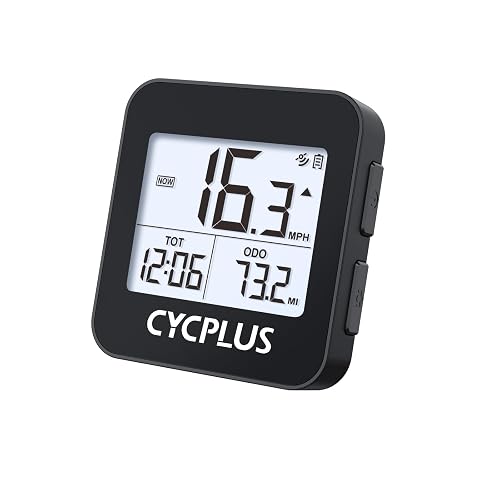
Pocket-Size, Bicycle Speedometer Odometer with Automatic Backlight, >55h Working Time, Provide Professional Data Analysis CYCPLUS Wireless GPS Bike Computer G1, 70g, 2.0" Screen, IPX6, 1200mAh
A compact choice for riders who want GPS tracking and automatic backlighting in a small, light body. It fits riders who prioritize low weight and long runs between charges over a large display.
Key specs
- Approximately 70 g body
- 2.0-inch screen with automatic backlight
- IPX6 water resistance and 1200 mAh battery
Pros
- Very light and easy to mount
- Long working time per the listing
- Automatic backlight suits early and late rides
Cons
- Small screen limits how many data fields fit
- IPX6 is splash-proof, not full submersion rated
Wireless GPS Bike Computer (50g, 2.4″ screen)

Bicycle Speedometer Odometer, Green Auto Backlight, Auto Start Stop, MPH/KMH, Altitude and Gradient Data Wireless GPS Bike Computer, 50g, 2.4" Screen, IPX7, 28H Runtime
This unit is aimed at riders who care about elevation and grade as much as speed, such as those riding hilly sport routes. The auto start/stop and backlight make it practical for mixed-condition rides.
Key specs
- Approximately 50 g body
- 2.4-inch screen with green auto backlight
- IPX7 water resistance and 28-hour runtime per the listing
Pros
- Altitude and gradient readouts for climbing
- IPX7 rating is strong for wet rides
- Auto start/stop reduces manual handling
Cons
- Runtime figure should be checked against your GPS use
- Backlight color is fixed, not adjustable
iGPSPORT BSC100S GPS Bike Computer
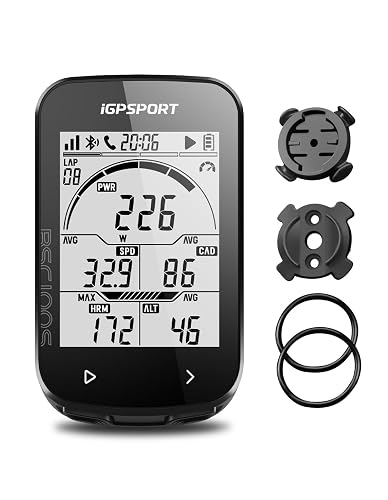
iGPSPORT BSC100S GPS Bike Computer Wireless, 2.6'' LCD Display 40H Rechargeable Waterproof Cycling Computer Bluetooth ANT+
A practical everyday sport computer for riders who ride often and do not want to charge daily. The 2.6-inch display and Bluetooth/ANT+ pairing cover most sensor setups.
Key specs
- 2.6-inch LCD display
- Rechargeable battery rated for about 40 hours
- Bluetooth and ANT+ sensor support
Pros
- Long battery life for multi-day riding
- Pairs with both Bluetooth and ANT+ sensors
- Waterproof body suits variable weather
Cons
- No full-color map display
- Display is smaller than touch-screen alternatives
iGPSPORT BSC200S GPS Bike Computer

iGPSPORT BSC200S GPS Bike Computer, Wireless Route Navigation 2.4'' Screen Bluetooth ANT+ Cycle Computer IPX7 Waterproof
For riders who want to load a route and follow it on screen without a phone in a pocket. It is a sensible middle option between basic GPS units and the touch-screen models.
Key specs
- 2.4-inch screen
- Wireless route navigation
- IPX7 waterproof rating and Bluetooth/ANT+
Pros
- Route following without a phone
- IPX7 rating is well suited to rain
- Good sensor compatibility
Cons
- Route files must be loaded before the ride
- Smaller screen is harder to read at a glance than the BSC500
SY Wireless Bike Computer

SY Bicycle Speedometer and Odometer Wireless Waterproof Cycle Bike Computer with LCD Display & Multi-Functions by YS
A basic wireless computer for riders who want several readouts on an LCD without paying for GPS features. It works well as a second bike computer or for a commuter.
Key specs
- LCD with multiple display functions
- Wireless sensor connection
- Waterproof housing for general riding
Pros
- Simple, no-GPS operation
- Multi-function display covers common data
- Low-complexity setup
Cons
- No route or map features
- Limited data compared with GPS units
iGPSPORT BSC100MAX GPS Bike Computer

iGPSPORT BSC100MAX GPS Bike Computer, 3'' Screen Auto Start/Stop Custom Data 40H Waterproof Bicycle Computer Wireless
A good match for riders who want to arrange their own data fields and use auto start/stop on a 3-inch screen. It suits training-minded sport riders who check numbers mid-ride.
Key specs
- 3-inch screen
- Customizable data fields
- Auto start/stop and waterproof body
Pros
- Larger screen than most GPS units in this list
- Custom layouts suit different ride goals
- Auto start/stop reduces setup
Cons
- Customization takes time to learn
- Larger body suits bars with room to spare
CYCPLUS Wireless GPS Bike Computer M1

4 Satellite Positioning, Bluetooth/ANT+, Auto Backlight Speedometer, >60 hours Working Time, Sync to CYCPLUS FIT and Strava CYCPLUS GPS Wireless Bike Computer M1, 2.9" LCD Screen, IPX6, 1200mAh
Best for riders who want their rides synced to training platforms and a long battery life. The four-satellite positioning and app sync are the main reasons to consider it.
Key specs
- 2.9-inch LCD screen
- Four-satellite GPS positioning
- IPX6 rating and 1200 mAh battery
Pros
- App sync supports training data review
- Long working time per the listing
- Automatic backlight suits varied light
Cons
- IPX6 is less protective than IPX7
- Sync depends on phone app and Bluetooth stability
Wireless GPS Bike Computer (temperature, ascent)

Wireless Bicycle Speedometer Odometer, Temperature, Ascent, Auto Backlight GPS Bike Computer, 2.4" Screen, Altitude, Gradient, IPX7, 28H
This model suits riders who track climbing and temperature alongside speed and distance. It is a reasonable fit for hilly sport routes and changeable weather.
Key specs
- 2.4-inch screen
- Temperature, ascent, altitude and gradient readouts
- IPX7 waterproof rating and 28-hour runtime per the listing
Pros
- Good climbing data for hilly routes
- IPX7 rating suits wet conditions
- Automatic backlight for low light
Cons
- Temperature readings can run warm if mounted near the bars or sun
- Battery figure should be verified for your GPS usage
Buying Guide
A specialized sport bike computer is easiest to choose once you decide what you actually need to see while riding. Start with the data you check most often, then work out whether that data requires GPS, a wireless sensor pairing, or only a wheel magnet.
Selection Criteria
Judge each unit on four points: how it gets speed and distance (wired sensor, wireless sensor, or GPS), how readable the screen is in sunlight and at a glance, how long the battery lasts between charges, and how well it is rated against water and dust. Check the listing for each point rather than relying on memory of older models.
Important Features
- GPS versus sensor-only: GPS units record location and route; sensor units rely on wheel or crank pairing and are simpler.
- Screen size: A 2.4-inch or larger display is easier to read mid-ride than a small monochrome screen.
- Auto start/stop: Keeps trip data accurate without manual pausing at lights.
- Connectivity: Bluetooth and ANT+ compatibility decides which heart-rate monitors, cadence sensors and power meters will pair.
- Backlight: Automatic backlighting helps for early or late rides.
Specs to Check
Look for an IPX rating. IPX6 handles heavy rain and road spray; IPX7 covers brief immersion and is the stronger choice for wet climates. Check battery runtime against how many hours you ride per charge, and confirm whether the figure assumes GPS on or off. Note the sensor standards supported, since mismatched pairing is a common frustration.
Choosing by Need
- Simple speed and distance: A wired or basic wireless unit keeps things light and reliable.
- Route following: Choose a model with route navigation or a touch map.
- Training data: Pick a unit with app sync and reliable GPS satellite support.
- Climbing: Look for altitude, gradient and ascent readouts.
Things to Watch Out For
Mount placement matters more than many buyers expect. A computer mounted behind a stem or in direct sun can read temperature high or struggle with glare. Also check whether the unit needs a phone app for firmware updates, and whether sensor pairing has been verified for your exact bike and sensors before you ride.
FAQ
Do I need GPS on a sport bike computer?
Not always. GPS is needed for route navigation, location-based mapping and accurate elevation on some units. If you only want speed, distance and cadence, a wireless or wired sensor model is simpler and often lasts longer on a charge.
What does IPX7 mean compared with IPX6?
IPX6 protects against strong water jets such as heavy rain or road spray. IPX7 protects against temporary immersion in water. For most riders both are sufficient, but IPX7 gives more margin for wet conditions.
Can I pair heart-rate monitors and cadence sensors?
Most units in this list support Bluetooth or ANT+ sensors, but compatibility varies by model. Check the listing for the connectivity standards named before buying, and confirm your specific sensors are supported.
How do I improve GPS accuracy?
Mount the unit with a clear view of the sky, avoid placing it directly under a metal bracket, and allow a few minutes for satellite lock before starting. Keep firmware updated where the manufacturer provides it.
Is a wired computer still worth it?
Yes, for riders who want a simple, low-maintenance setup. Wired units avoid battery worries for the sensor and are easy to diagnose, though routing the cable can be fiddly on some frames.
Should I choose a touch screen or a button model?
Touch screens make map navigation and menu changes faster, especially with gloves off. Button models are often simpler to use with gloves on and tend to be less distracting. Choose based on whether you need maps.
Does battery life vary by usage?
Yes. GPS, backlight use and wireless sensor connections all draw power, so real-world runtime is often shorter than the rated figure. Plan charging around your longest ride and the GPS mode you actually use.
Conclusion
For a simple, low-maintenance speedometer, the wired CATEYE unit is a sound starting point. Riders who want turn-by-turn guidance should look at the iGPSPORT BSC500 or BSC200S. Riders who value long battery life and everyday reliability will find the BSC100S a practical choice, while the CYCPLUS M1 suits app-based training. Climbers should consider the models with altitude, gradient or ascent data. Match the screen, sensors and water rating to how you ride, and the right specialized sport bike computer for your routine becomes clear.







Write Your Review
No reviews yet. Be the first to share your experience!