This page contains Amazon affiliate links. As an Amazon Associate we earn from qualifying purchases, at no extra cost to you.
When choosing a GPS bike computer, the key factors are how you plan to use navigation, the screen size and type, battery life, and sensor connectivity. Riders who explore new routes will benefit from turn-by-turn directions and map displays, while those focused on training may prioritize power meter compatibility and structured workouts. Screen readability in sunlight and with gloves matters, as does whether the device uses a touchscreen, buttons, or both. For a deeper look at navigation options, see our bike computer navigation features explained.
Battery life can range from around 20 hours to over 36 hours, so match it to your typical ride length. Connectivity via ANT+ and Bluetooth lets you pair heart rate monitors, cadence sensors, power meters and rearview radar. Some computers also offer e-bike integration, group tracking, and automatic route syncing with apps like Strava and Komoot. Below, we compare six GPS bike computers across these criteria to help you decide. For a deeper look, 8 Best Cateye Quick Bike Computer Models for Every Rider (2026) covers this in detail.
Every specification on this page comes from each product’s Amazon listing (item data from Amazon’s Creators API), checked on 29 October 2026. We have not used these products ourselves, so the picks are based on published specifications only.
If you’re deciding between a dedicated GPS computer and using your phone, read our GPS bike computer vs phone mount comparison. For adding sensors, see bike sensors explained.
How we chose these
- Screen and controls: Touchscreen size and button options affect readability and operation with gloves.
- Navigation features: Turn-by-turn directions, map detail, rerouting and off-course warnings.
- Battery life: How long the computer lasts on a charge, especially for long rides.
- Sensor connectivity: ANT+ and Bluetooth support for heart rate, cadence, power meters and radar.
All models listed are GPS bike computers that track speed, distance and route, but navigation and training features vary.
Comparison table
| Product | Screen | Battery Life | Navigation | Waterproof | Weight | Connectivity |
|---|---|---|---|---|---|---|
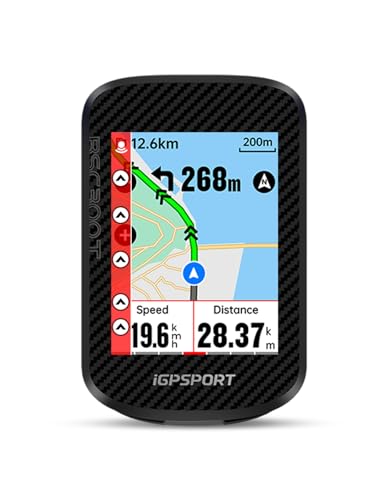
| iGPSPORT BSC500 | 3.3″ touchscreen | Not stated | Turn-by-turn with voice alerts, yaw replanning | Not stated | 0.24 lb | Bluetooth, ANT+ |
| Garmin Edge 540 | Not stated | Up to 26 hrs (42 hrs battery saver) | Multi-band GNSS, ClimbPro, ride type maps | Not stated | 0.17 lb | Not stated |
| iGPSPORT BSC300T | 2.4″ touchscreen | Not stated | Offline maps, turn prompts, off-course warning | Not stated | 0.15 lb | ANT+, Bluetooth 5.0 |
| Wahoo ELEMNT BOLT V3 | 2.3″ color screen | 20 hours | Turn-by-turn, on-demand routing, auto downloads | IPX7 | 0.19 lb | ANT+, Bluetooth, Wi-Fi |
| COOSPO CS600 | 2.4″ color touchscreen | 36 hours | Route navigation, breadcrumb trail, on-screen map | IPX7 | 0.26 lb | Bluetooth, ANT+ |
| Garmin Edge Explore 2 | 3″ touchscreen | Not stated | Preloaded maps, e-bike routing, POIs | Not stated | 0.26 lb | Not stated |
Battery life, weights and ratings are the figures in each product’s Amazon listing. ‘Not stated’ means the listing does not give that detail.

Pros
- Large touchscreen
- Voice navigation
- Climb training features
- Dual-band GPS
Cons
- Battery life not stated
- Waterproof rating not stated
- Heavier than some competitors

Pros
- Advanced training metrics
- Long battery life
- Accurate multi-band GPS
- ClimbPro on all rides
Cons
- Screen size not stated
- Connectivity protocols not listed
- Waterproof rating not stated
Pros
- Touchscreen with button backup
- Offline maps
- Group tracking
- Dual connectivity
Cons
- Battery life not stated
- Waterproof rating not stated
- Screen smaller than some other models

Pros
- IPX7 waterproof
- Radar integration
- Automatic route syncing
- Wi-Fi connectivity
Cons
- 20-hour battery is the shortest stated here
- 2.3-inch screen is the smallest here

Pros
- Long 36-hour battery
- IPX7 waterproof
- Color touchscreen
- Extensive data
Cons
- No voice navigation mentioned
- GPS and GLONASS only listed

Pros
- Large, easy-to-read screen
- E-bike specific features
- Incident detection
- Preloaded maps
Cons
- Battery life not stated
- 0.26 lb ties for heaviest here
- Connectivity protocols and waterproof rating not listed
1. iGPSPORT BSC500: for voice navigation and climb training
iGPSPORT says the BSC500 has a 3.3-inch touchscreen that can show up to 12 data fields per page. The computer supports dual-band satellite positioning and smart map navigation with turn reminders that adjust based on speed. It also offers climb planning with iClimb 2.0 and voice navigation from a built-in speaker.
- Supports GPS, Beidou, GLONASS, GALILEO, QZSS (iGPSPORT)
- Yaw planning automatically reroutes if off course (iGPSPORT)
- Compatible with e-bike systems and radar (iGPSPORT)
Pros: Large touchscreen; voice navigation; climb training features; dual-band GPS
Cons: Battery life not stated; waterproof rating not stated; heavier than some competitors
2. Garmin Edge 540: for advanced training and navigation
Garmin says the Edge 540 uses button controls and multi-band GNSS for accurate positioning in challenging environments. It provides daily suggested workouts and personalized coaching that adapts to training load when paired with a power meter and heart rate monitor. The ClimbPro ascent planner shows remaining ascent and grade on every ride without a course. If you want more background, see 8 Best Bike Computer Wireless Picks for Every Rider (2026).
- Stamina insights and power guide features require compatible power meter and heart rate monitor (Garmin)
- Garmin says the maps show frequently used roads and trails (Garmin)
- Battery saver mode extends runtime to 42 hours (Garmin)
Pros: Advanced training metrics; long battery life; accurate multi-band GPS; ClimbPro on all rides
Cons: Screen size not stated; connectivity protocols not listed; waterproof rating not stated
3. iGPSPORT BSC300T: for touchscreen maps and group tracking
iGPSPORT says the BSC300T has a 2.4-inch touchscreen with six buttons and supports global offline map downloads. It offers over 130 riding data fields and real-time group tracking to see teammates’ locations. The computer connects to sensors via ANT+ and Bluetooth 5.0 and can sync data to Strava and Komoot.
- Supports e-bike mode and displays power level (iGPSPORT)
- Off-course warning alerts until you return to route (iGPSPORT)
- Real-time tracking shows group members’ positions (iGPSPORT)
Pros: Touchscreen with button backup; offline maps; group tracking; dual connectivity
Cons: Battery life not stated; waterproof rating not stated; screen smaller than some other models
4. Wahoo ELEMNT BOLT V3: for aero design and radar integration
Wahoo says the ELEMNT BOLT V3 provides on-device turn-by-turn navigation with top LEDs and audible cues. It automatically downloads routes from Strava, Ride With GPS, and Komoot, and can generate on-demand routes from a selected location. The computer integrates with ANT+ rearview radar to show approaching vehicles on screen.
- Smart notifications for calls, texts, and apps when paired with smartphone (Wahoo)
- LiveTrack link sharing available via companion app (Wahoo)
- Aero design with integrated mount (Wahoo)
Pros: IPX7 waterproof; radar integration; automatic route syncing; Wi-Fi connectivity
Cons: 20-hour battery is the shortest stated here; 2.3-inch screen is the smallest here
5. COOSPO CS600: for long battery life and color touchscreen
CooSpo says the CS600 has a 2.4-inch high-resolution color touchscreen with auto-backlight. It uses GPS and GLONASS for tracking and supports route navigation with on-screen mapping. The computer syncs with the COOSPORIDE app and can automatically upload ride data to Strava and TrainingPeaks. If you want more background, see Garmin Edge 25 GPS Bike Computer Review: Features and Performance.
- 150+ data insights available for analysis (CooSpo)
- Customizable data dashboard for different riding styles (CooSpo)
- 2-hour Type-C charging (CooSpo)
Pros: Long 36-hour battery; IPX7 waterproof; color touchscreen; extensive data
Cons: No voice navigation mentioned; GPS and GLONASS only listed For another angle, check out iPhone as Bike Computer vs Dedicated Unit: Which Should You Choose?.
6. Garmin Edge Explore 2: for easy navigation and e-bike routing
Garmin says the Edge Explore 2 has a 3-inch glove-friendly touchscreen and includes activity profiles for road, off-road and indoor riding already set up. It highlights frequently used roads and trails on ride type-specific maps and can provide e-bike routing with alerts based on battery status and range. Incident detection and rider-to-rider messaging are available when paired with a smartphone.
- Compatible with Varia radar and smart lights (sold separately) (Garmin)
- LiveTrack and GroupTrack features for sharing location (Garmin)
- Music control from the device during indoor rides (Garmin)
Pros: Large, easy-to-read screen; e-bike specific features; incident detection; preloaded maps
Cons: Battery life not stated; 0.26 lb ties for heaviest here; connectivity protocols and waterproof rating not listed
Which one fits you
| Your situation | Look at | Why |
|---|---|---|
| You want turn-by-turn navigation with voice prompts | iGPSPORT BSC500, Wahoo ELEMNT BOLT V3 | These models give audible and visual cues to keep you on route. |
| You need long battery life for multi-day rides | COOSPO CS600, Garmin Edge 540 | The CS600 offers 36 hours, and the Edge 540 up to 42 hours in saver mode. |
| You ride an e-bike and want integrated data | iGPSPORT BSC300T, Garmin Edge Explore 2 | Both display e-bike power level or battery status and offer specific routing. |
| You want a large, easy-to-read screen | iGPSPORT BSC500, Garmin Edge Explore 2 | These have 3.3-inch and 3-inch screens respectively, good for visibility. |
Practical tips
- Consider whether you need navigation or just basic GPS tracking. Models with maps and turn-by-turn directions are more helpful for exploring new routes.
- Check sensor compatibility if you plan to add a heart rate monitor, cadence sensor or power meter. Look for ANT+ and Bluetooth support.
- Battery life varies widely, from 20 hours (Wahoo) to 36 hours (CooSpo) and up to 42 hours in the Edge 540’s saver mode; match it to your longest rides.
- If you ride in rain or with gloves, check the controls: Garmin calls the Explore 2 screen glove- and rain-friendly, and the Edge 540 and iGPSPORT BSC300T have buttons.
FAQ
Do these bike computers need a phone connection for navigation?
Wahoo says the ELEMNT BOLT V3 can build on-demand routes on the device and downloads routes from Strava, Ride With GPS and Komoot; iGPSPORT lists offline map downloads for the BSC300T. Check each listing for how routes get onto the unit.
What sensors can I connect to these GPS computers?
Most support ANT+ and Bluetooth sensors for speed, cadence, heart rate, and power meters. Check each model’s specs for compatibility.
Are these computers waterproof?
Wahoo and CooSpo list an IPX7 rating for the BOLT V3 and CS600. The other listings do not state a rating, and Garmin describes the Explore 2 screen as rain-friendly.
Can I use these for indoor training?
Garmin says the Edge Explore 2 can control music during indoor rides when paired with a smartphone. The Edge 540 offers training prompts. Other models may have indoor modes, but check the maker’s details.
Sources
Specifications from each product’s Amazon listing, checked 29 October 2026: iGPSPORT BSC500, Garmin Edge 540, iGPSPORT BSC300T, Wahoo ELEMNT BOLT V3, COOSPO CS600, Garmin Edge Explore 2. Makers can change specifications; check the product page before you buy.