 By Caleb Morgan
Updated November 2026
Choosing the best GPS bike computer comes down to how you ride. Some cyclists need turn-by-turn navigation on unfamiliar roads, others want structured training data, and many simply want a reliable way to track routes without fiddling with a phone. This guide compares five GPS units across the criteria that matter most: navigation quality, battery endurance, mapping, mounting, ease of use, and how well each model handles training metrics. Each pick is matched to a specific rider profile so you can narrow the field quickly.
Our top picks at a glance
- 1
 TOP CHOICEBest overallGarmin Edge 840View on Amazon
- 2
 TOP CHOICEBest for training structureGarmin Edge 540View on Amazon
- 3
 TOP CHOICEBest for touchscreen mappingiGPSPORT BSC500View on Amazon
- 4
 Best for open-platform route planningHammerhead KarooView on Amazon
- 5
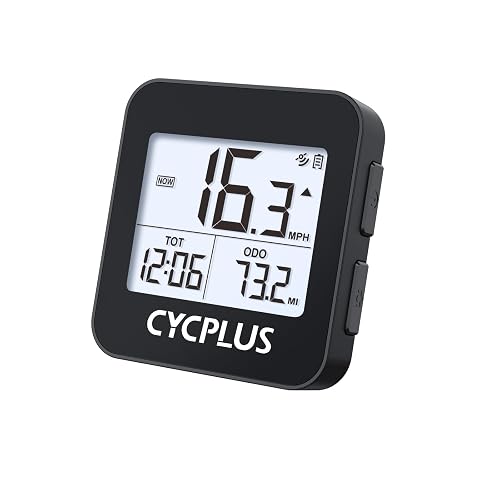 Best budget pickCYCPLUS G1View on Amazon
Our Top Picks
Quick Comparison
| Product | Best for | Key feature |
|---|---|---|
| Garmin Edge 840 | Best overall | Compact body with full GPS navigation and training metrics |
| Garmin Edge 540 | Training structure | Adaptive coaching and up to 26 hours of battery life |
| iGPSPORT BSC500 | Touchscreen mapping | 3.3-inch touch display with map-based voice navigation |
| Hammerhead Karoo | Open-platform route planning | Touchscreen with ANT+ and BLE connectivity plus GNSS |
| CYCPLUS G1 | Budget buyers | Lightweight 70 g body with IPX6 water resistance |
Garmin Edge 840
Garmin Edge 840, Compact GPS Cycling Computer
Best for: Overall all-round use, from commuting to structured road training
This is the model for riders who want one unit that handles navigation, training analysis and everyday ride tracking without a steep learning curve. It suits road cyclists and gravel riders who value a compact screen and dependable GPS signal.
Key specs
- Compact cycling computer form factor
- GPS cycling navigation with turn prompts
- Training metrics and performance tracking
Pros
- Strong navigation for road and gravel routes
- Compact footprint fits a wide range of handlebars
- Deep training data for riders who review their numbers
Cons
- Menu depth can take time to learn
- Full feature set is more than casual riders may use
Bottom line: The safest recommendation for riders who want one computer that does most things well.
Garmin Edge 540
GarminButton Controls, Targeted Adaptive Coaching, Advanced Navigation, Up to 26 hours Edge 540, Compact GPS Cycling Computer
Best for: Training structure and workout guidance
The Edge 540 targets riders who follow training plans and want on-device coaching prompts. Owners often describe its adaptive coaching as the main reason they chose it over simpler units.
Key specs
- Button controls with compact body
- Targeted adaptive coaching
- Advertised battery life up to 26 hours
Pros
- Adaptive coaching adjusts to recent training load
- Long battery life for multi-hour rides
- Button controls work well with gloves
Cons
- Coaching features are most useful with a subscription-style training habit
- No touchscreen, which some riders find slower for map browsing
Bottom line: A strong fit for structured trainers who prefer physical buttons to a touchscreen.
iGPSPORT BSC500
iGPSPORT BSC500 GPS Bike Computer, 3.3'' Touch Screen MAP Voice Navigation
Best for: Touchscreen mapping and voice navigation
The BSC500 suits riders who want a large touch display and map-based voice navigation without paying for a premium brand. It works well for touring cyclists and those who ride unfamiliar areas often.
Key specs
- 3.3-inch touch screen
- MAP voice navigation
- GPS-based route guidance
Pros
- Large touch display is easy to read at a glance
- Voice navigation reduces the need to look down
- Map view shows surrounding roads clearly
Cons
- Touch input can be less reliable with wet gloves
- Third-party ecosystem is smaller than the big brands
Bottom line: A good value for riders who prioritize mapping and voice cues on a bigger screen.
Hammerhead Karoo
Hammerhead Karoo GPS Cycling Computer with Touchscreen & ANT+/BLE Connectivity Hammerhead Karoo Wireless GPS Bike Computer ANT+/BLE/GPS/GNSS Touchscreen
Best for: Open-platform route planning and sensor connectivity
The Karoo is built for riders who connect many sensors and want flexible route planning. Its ANT+ and BLE support gives it wide compatibility with power meters, heart rate straps and trainers.
Key specs
- Touchscreen display
- ANT+ and BLE connectivity
- GPS/GNSS positioning
Pros
- Broad sensor compatibility across brands
- Touchscreen suits route browsing and map work
- Flexible route planning for long-distance riders
Cons
- Setup involves more configuration than plug-and-play units
- Battery use is higher with the screen active for long periods
Bottom line: The right choice for riders who use multiple sensors and want an open, flexible system.
CYCPLUS G1
Pocket-Size, Bicycle Speedometer Odometer with Automatic Backlight, >55h Working Time, Provide Professional Data Analysis CYCPLUS Wireless GPS Bike Computer G1, 70g, 2.0" Screen, IPX6, 1200mAh
Best for: Budget-conscious riders who want basic GPS tracking
The G1 is a lightweight, pocket-sized option for riders who mainly want speed, distance and route tracking. It is a sensible entry point for casual riders or as a backup unit.
Key specs
- 70 g body weight
- 2.0-inch screen
- IPX6 water resistance rating
- 1200 mAh battery
Pros
- Very light and compact
- IPX6 rating handles rain well
- Simple interface with minimal setup
Cons
- Small screen limits map detail
- Training analysis is basic compared with premium units
Bottom line: A practical budget pick for riders who want core GPS data without advanced features.
Buying Guide
Navigation quality and map display
Look for turn-by-turn prompts, route import support and a screen you can read in sunlight. Larger displays make maps easier to follow, but they draw more power. Check whether the unit supports the route formats you already use, such as GPX files from route planning sites.
Good picks for this: Garmin Edge 840, iGPSPORT BSC500
Battery life and charging
Manufacturers usually quote battery life under specific conditions, often with GPS on and the screen at moderate brightness. For rides longer than four hours, favor units with a longer rated runtime and carry a charging cable. Expect shorter real-world runtime with the backlight on high.
Good picks for this: Garmin Edge 540, Hammerhead Karoo
Training metrics and sensor compatibility
If you use a heart rate strap, cadence sensor or power meter, confirm the unit supports ANT+ and, where needed, Bluetooth Low Energy. Structured training features matter most if you follow a plan and review your data after each ride.
Good picks for this: Garmin Edge 540, Hammerhead Karoo
Size, weight and handlebar fit
Measure your handlebar diameter and check the mount type. Compact units fit crowded cockpits and reduce vibration on rough surfaces. Weight matters less than mounting stability, so prioritize a secure mount over a few grams saved.
Good picks for this: CYCPLUS G1, Garmin Edge 840
Water resistance and durability
Look for an IP or IPX rating. An IPX6 rating indicates resistance to powerful water jets, which covers most rain and road spray. Riders who train in heavy wet conditions should confirm the rating and keep the port covers sealed.
Good picks for this: CYCPLUS G1, Garmin Edge 540
Use case: commuting, road, gravel or trail
Commuters benefit from simple, durable units with quick route recall. Gravel and trail riders should prioritize mapping and route accuracy. Road racers often value training analysis and sensor support above all else.
Good picks for this: Garmin Edge 840, Hammerhead Karoo
Ease of use and software ecosystem
Consider how you will upload rides and update firmware. Some ecosystems connect smoothly with third-party training platforms, while others rely on their own app. Check that your preferred platform is supported before you buy.
Good picks for this: iGPSPORT BSC500, Hammerhead Karoo
FAQ
What makes a GPS bike computer better than a phone?
A dedicated unit typically offers longer battery life, a more readable screen in bright light, and better water resistance. It also avoids the distraction of a phone on the bars and keeps running if the phone loses signal or battery.
Do I need maps on my bike computer?
Maps help most when you ride unfamiliar routes or want to see nearby roads. If you mostly follow a loaded route, turn prompts may be enough. Check whether a unit offers both options before you decide.
How accurate is GPS on a bike computer?
Accuracy depends on satellite signal, tree cover, buildings and the quality of the receiver. Most modern units track distance and speed reliably in open terrain. Dense urban canyons and heavy forest can reduce accuracy, so calibrate and compare with a known distance if precision matters.
Can I use a GPS bike computer with a power meter?
Yes, if the unit supports ANT+ or Bluetooth Low Energy and the power meter uses the same protocol. Confirm compatibility in the manufacturer’s specifications before buying.
How often should I update the firmware?
Install updates when the manufacturer releases them, especially those that fix GPS or sensor issues. Keep the unit connected to Wi-Fi or your phone app during updates and avoid interrupting the process.
Should I buy a budget unit or a premium one?
Budget units work well for basic tracking and casual rides. Premium models make sense if you use structured training, detailed navigation or many sensors. Match the feature set to how you ride rather than buying the most features available.
How do I protect a GPS bike computer from theft?
Remove the unit when you leave the bike, or use a locking mount. Keep it out of sight in a parked vehicle and register it with the manufacturer if that option is available.
Conclusion
The best GPS bike computer depends on your riding goals. The Garmin Edge 840 is the most balanced choice for most cyclists who want navigation and training data in one compact unit. The Garmin Edge 540 suits riders who follow structured plans and prefer buttons. The iGPSPORT BSC500 offers a large touchscreen and voice navigation at a value-focused position. The Hammerhead Karoo serves riders who connect many sensors and want an open platform. The CYCPLUS G1 is a practical entry point for casual riders who want basic GPS tracking. Compare the specifications against your own routes, sensors and budget category before you buy. If you have questions about health-related training targets, consult a qualified coach or medical professional.
Sources
- How GPS works, signal accuracy factors and official satellite information (gps.gov)
- Measurement standards and guidance on time and position accuracy (nist.gov)
- Background research on heart rate monitoring and training intensity (nih.gov)
Related reading
- Wahoo GPS Bike Computer: 7 Best Models Compared for Every Rider (2026)
- Bike Computer with GPS: 7 Best Picks Compared for Every Rider (2026)
- Best GPS Bike Computers for Navigation & Training: 6 Models Compared
- 6 Best Garmin GPS Bike Computer Models Compareds (2026)
- 5 Best Wahoo Elemnt Roam GPS Bike Computer Options Compareds (2026)
- Stationary Bike Computer Stand: 5 Best Picks for Indoor Riders (2026)
About Caleb Morgan
Caleb Morgan is part of our editorial team and reviews and edits our cycling apparel & tech guides, checking product details against manufacturer specifications and owner feedback.





Write Your Review
No reviews yet. Be the first to share your experience!